
The Arts
How Art Works
The Arts for Curious Minds
An introduction to making, seeing, and living with art
Introduction
The arts are how human beings give feeling a body. A painting holds a way of seeing. A song holds a way of aching or rejoicing. A dance holds a way of being alive in time. None of this is extra decoration on top of real life. For as long as people have buried their dead, cooked together, and tried to explain themselves to one another, they have also made art.
You already live with the arts, even if you never set foot in a gallery. The tune you hum without noticing, the photograph on a shelf, the design of a chair, the hymn at a funeral, the film that wrecked you on a Sunday evening — these are not lesser cousins of "proper" culture. They are the same family, wearing everyday clothes.
This book is for a curious person who wants a map, not a membership card. It will not tell you which artists you must admire. It will try to show what the arts are doing when they work: how images speak, how music moves, how bodies think in dance, how objects and buildings carry meaning, and how money and power get tangled up in all of it.
There is a kind of intimidation that hangs around art. Some of it is earned — skill is real, and some work asks for patience. Some of it is a social trick, a way of making people feel they arrived late to a conversation. You can ignore the trick. You cannot ignore your own eyes and ears. They are the instruments you brought.
We will walk through looking, listening, moving, making, performing, taste, and the ordinary places art still lives. Literature has its own companion volume in this series, so this book spends more time on the arts you meet with the senses before you meet them with a plot.
Think of this as a walk through several neighbouring workshops rather than a single museum tour. You can linger where you feel at home and still peek through the other doors. Most people have one art that comes easily and another that feels locked. That is normal. The locked one often opens once you borrow a little patience from the one you already love.
Come as you are. Liking something is a beginning, not a conclusion. The useful next step is to notice why.
One more thing. You will meet people who treat art as a contest of sophistication. Walk around them. The arts are older than that game and larger than it. A folk song that has lasted two hundred years and a painting that startles you on a first viewing are both doing the work. Rank is a later invention.
Chapter 1
What the Arts Actually Are
The arts are practices of making that aim at experience as well as use. A hammer is judged by whether it drives a nail. A song is judged by whether it is worth hearing again. The line is not perfectly clean. A beautiful chair is still a chair. A film can teach and still be art. But the centre of gravity is different. Art wants to be encountered, not only consumed.
People group the arts in various ways: visual art, music, dance, theatre, film, design, craft. The labels help us talk. They also leak. Opera is music and drama. Architecture is shelter and sculpture. A ritual can be all of the above. Do not treat the categories as cages. Treat them as rooms in one house.
Art, Beauty, and Expression
Art is not the same as beauty, though they have been companions for a long time. Some art is beautiful in the ordinary sense — balanced, glowing, easy to love. Some art is harsh, broken, or deliberately ugly because the truth it is after would be cheapened by prettiness. Beauty is one of art's great powers. It is not its only job.
Nor is art the same as self-expression. Expression matters. A child covering a page with colour is doing something human and good. Serious art usually adds a further demand: the making has to work for someone who is not the maker. It has to stand up when the feeling that produced it has cooled. That is the difference between a diary and a piece offered to others.
Craft and the Social Nature of Art
Craft sits inside art even when we pretend it does not. Someone learned how to stretch a canvas, time a joke, hold a note, join two pieces of wood. Romantic myths of pure inspiration leave this out because it is less glamorous. Without craft, inspiration has nowhere to live.
The arts are also social. They need teachers, audiences, instruments, walls, and often money. A solitary genius is a stirring story and a rare case. Most art happens in traditions, workshops, troupes, and scenes. You inherit a language of forms before you invent a new sentence in it.
If this sounds broad, that is because the subject is broad. The point of a definition here is not to police the border. It is to say what we are looking at: human making aimed at meaning, feeling, and attention.
By the end of this chapter, the arts should look less like a luxury department and more like a family of practices. They make experience hold still long enough for other people to meet it.
A useful test, if you want one, is this: would the thing still be worth meeting if it stopped being useful tomorrow? A coat that is only warm is a coat. A coat whose cut you would miss is edging into the arts. The test is messy, like the subject. Messy tests are better than clean ones that leave half the house outside.
Chapter 2
Why Humans Make Art
We make art because we cannot put the whole of a feeling into a useful sentence. Grief, praise, desire, dread, wonder — these overflow talk. So we sing. We mark a wall. We move in patterns. We carve a face that will outlast the person. Art begins where information is not enough.
Play is part of it. Children arrange stones and hum nonsense before anyone calls it culture. That play is practice for a more deliberate making later, but it is also complete in itself. A culture that forgets play in art becomes stiff. A culture that admits only play becomes shallow. The living arts keep both the game and the stakes.
Memory, Belonging, and Status
We also make art to remember. A portrait keeps a look that time will take. A folk song keeps a complaint or a joke that official history did not bother with. Monuments are arguments about what should not be forgotten, which is why people fight over them. Memory is never neutral. Art is one of the ways a community chooses its memories.
Art builds belonging. Shared songs at a match or a service, shared dances at a wedding, shared jokes in a local theatre — these say we are in this together. The same power can exclude. If you do not know the tune, you are outside the circle. Every communal art has this double edge.
There is status in it too, and we may as well say so. People have used art to display wealth, taste, and power since palaces needed walls. That does not cancel the other motives. It complicates them. A painting can be a prayer and a luxury object in the same afternoon.
Worship and the Joy of Making
Some making is an attempt to get right with the world. Offerings, icons, temple sculpture, sacred music — a huge part of art history is religious. Even now, when many artists would not use that word, you can feel the old impulse: to put something well-made in front of what seems larger than us.
And some art is simply the joy of making a thing that works on its own terms. A melody that sits right. A pot whose curve is inevitable. That joy does not need a theory. It needs time, tools, and a person who has not been talked out of caring.
By the end of this chapter, the question "why art?" should have more than one answer. We make it to hold feeling, to play, to remember, to belong, to display, to worship, and sometimes just because the making itself is a way of being alive.
Notice, too, how often art appears at the edges of a life: the first dance, the last hymn, the poster on a teenager's wall, the film two people talk about for years. We reach for made things when experience is too large to carry bare. That reaching is not a hobby. It is one of the ways we stay human under pressure.
Chapter 3
Looking – Images, Paint, and Form
Looking is a skill. We glance all day and call it seeing. A picture asks for a different pace. It wants you to notice relations: dark against light, a hand at the edge of the frame, the way a colour makes another colour speak. You do not need a lecture to begin. You need to stay with the image longer than habit allows.
Painting and drawing are ways of thinking with marks. A line can be nervous or calm. Paint can be thin as breath or thick as weather. Realism is only one dialect. Some pictures want to resemble the world. Others want to resemble a feeling about the world. Both can be truthful.
Sculpture and Composition
Sculpture meets you in actual space. You can walk around it. Light changes it as you move. That is why photographs of sculpture are always a little unfaithful. The thing was made for bodies, not only for eyes on a flat screen.
Composition is the quiet law of pictures. Where the weight sits. What is left empty. What the eye hits first. Artists argue with these laws and also rely on them. You can feel composition without naming it. If an image feels restless or serene, something in the arrangement is doing that work.
Subject, Form, and Deliberate Looking
Subject matter gets most of the public conversation — who is in the picture, whether the scene is pretty, whether the politics are acceptable. Form is what makes the subject stay. Two paintings of the same face can have opposite meanings because the making was different. Try, at least once, to describe a picture without saying what it "is of." You will start to see the art.
Museums can help and hinder. They gather work that would otherwise be scattered, and they can freeze it into a march of styles. If you go, give yourself permission to skip. Stand longer with one piece that holds you than with twenty that do not. Fatigue is not a failure of taste. It is a limit of attention.
Images now arrive in a flood. That does not make looking obsolete. It makes deliberate looking rarer and more valuable. A single picture given ten minutes can reset an eye that has been grazing all morning.
By the end of this chapter, looking should feel like an activity rather than a reflex. Pictures think in colour, line, and arrangement, and they only finish their thought if someone stays.
Another small practice: when a picture stops you, name three concrete things in it before you decide what it means. A red sleeve. A window full of weather. A face turned away. Meaning grows better from details than from a rush toward a verdict. Verdicts are cheap. Looking is the actual work.
Chapter 4
Listening – Music and Sound
Music is organised time. It takes the raw fact of sound and gives it pattern: pulse, pitch, return. You do not have to read notation to feel this. Your body already knows when a beat is late, when a chorus arrives, when a silence is doing work.
Melody is the part you can hum. Harmony is the weather around it. Rhythm is the walk. Different traditions balance these differently. Some music is almost all drum and voice. Some is a slow change of chords with almost no tune you could whistle. None of that is a failure to be "proper" music. It is a different idea of what sound is for.
Attention and Memory
Listening is not the same as having music on. Background sound can be a comfort. Attention is something else. Try, once in a while, to sit and let a piece run without picking up the phone. Notice when you get bored. Boredom is often the doorway. Many pieces reveal their shape just after you wanted to leave.
Music attaches itself to life with a force other arts envy. A song can return you to a kitchen from twenty years ago. That power is why people play music at weddings and gravesides. It is also why a cheap tune can manipulate you. Sentiment is not the enemy. Unexamined sentiment is.
Improvisation, Composition, and Silence
Improvisation and composition are two ways of arriving at form. One happens in the moment, in conversation with other players. The other is built more slowly and then performed. Jazz, raga, and many folk practices make a home for the first. Written scores make a home for the second. Plenty of music lives between them.
You do not need to "understand" a piece in a technical sense to live with it honestly. Technique helps you say why something works. It is not a ticket of admission. Trust the hair on your arms. Then, if you like, learn the names for what just happened.
Silence belongs to music. The rest, the intake of breath, the bar before the drum — these are not empty. A culture that fills every second with sound loses one of music's oldest materials.
By the end of this chapter, music should look like time made audible. It works on the body first, and the mind catches up if you give it the courtesy of attention.
If you grew up with one kind of music, let that be a home base rather than a fence. Home bases are how people start. Fences are how they shrink. From a song you already love, step one pace sideways — the same singer in a quieter register, the same rhythm in another tradition, the same feeling in an older recording. Sideways is how ears grow.
Chapter 5
Moving – Dance and the Body
Dance is thought that does not need a paragraph. A body in patterned motion can say dignity, flirtation, grief, or welcome before anyone speaks. If you have ever watched a room change when people start to dance, you have seen the art do its oldest job.
Some dance is social: the point is to join, not to be watched. Some is theatrical: the point is to be seen and read. Both are real. Treating only the stage as art misses the village, the club, the wedding, the procession. Those are academies too. They teach timing, courtesy, and courage.
Training and Tradition
Training makes more possible. A dancer's apparent ease is usually years of repetition. That fact should increase your respect, not your distance. You do not need those years to watch well. You need to look at the whole body, not only the face, and to notice relationship — between dancers, between movement and music, between stillness and burst.
Different traditions train different bodies. Ballet's lifted line, a classical Indian form's precise hands and eyes, a West African ensemble's polyrhythm, hip-hop's attack and invention — each is a philosophy you can see. Comparing them to pick a winner is a poor game. Learning what each one cares about is a better one.
Presence, Shame, and Choreography
Dance disappears as it happens. That is part of its poignancy. Film can keep a trace. It cannot keep the weather of being in the room. If you can see dance live even once in a while, do. The air is part of the piece.
People who say they cannot dance often mean they were shamed out of it. The body remembers the shame longer than the steps. Art at the social level can be a way back in: not to perform, but to inhabit your own limbs without apology.
Choreography is the name for movement designed to be repeated or shared. Even improvised dance has an intelligence. Someone is choosing, moment by moment, what the next second should feel like. Watching that choice is one of the pleasures.
By the end of this chapter, dance should look like the arts in their most bodily form. Meaning here is not added on top of movement. It is the movement, offered to other people.
And if you feel foolish even thinking about dance, you are in a large company. Modern life trains people to live from the neck up. Dance is a reminder that intelligence also lives in timing, weight, and the decision to take up space. You do not have to perform in order to honour that reminder.
Chapter 6
Objects, Places, and Craft
Not all art hangs on a wall. A bowl, a quilt, a gate, a room, a garden — these can carry the same care as a painting. Craft is sometimes treated as art's practical cousin. That ranking says more about status than about quality. A perfect joint in wood can be as eloquent as a perfect line in ink.
Design is art with a job to do. The job does not cancel the art. A typeface, a jacket, a kettle, a street sign: someone decided how they would meet the hand and the eye. When design is good you barely notice it. When it is bad you notice nothing else. That invisibility is a kind of success.
Places, Materials, and Use
Places are made as well as found. A square can welcome or expose. A church, mosque, or temple can lift the gaze or weigh it down. Even a kitchen can be composed. Architecture has its own book in this series; here it is enough to say that space is one of the arts' materials. You walk through meaning whether you name it or not.
Materials tell the truth. Clay remembers the hand. Cloth remembers the loom. Concrete remembers the mould. Artists who respect material let it speak. Artists who bully it can still produce wonders, but you often feel the fight. Learning to see material is a way of honouring the physical world.
Use does not cheapen an object. A cup that is a pleasure to hold has succeeded twice. The modern habit of putting craft behind glass has saved fragile things and also slightly lied about them. Many were made to be worn out by living.
Repair and the Made World
Repair is part of this family. Visible mending, patched buildings, instruments kept in play for a century — these are arts of continuance. A culture that only values the new will throw away a great deal of intelligence with the object.
If you want a doorway into the arts and galleries make you tense, start with things people handle. Markets, workshops, kitchens, instrument cases. Skill shows up there without asking you to have an opinion first.
By the end of this chapter, art should include the made world of objects and places. Beauty is not only something you stand in front of. It is something you can live inside and hold.
Houses teach this every day. A room with one well-placed lamp can feel kinder than a room stuffed with expensive objects. Art in daily life is often subtraction as much as addition: fewer things, better chosen, given enough space to be themselves.
Chapter 7
Performance and the Audience
Some arts exist fully only when someone is there to receive them. A concert, a play, a dance, a reading — these are events. The audience is not a row of consumers. It is part of the instrument. Laughter, hush, restlessness, the quality of listening: performers feel these and the piece changes.
Live performance has a risk that recordings remove. Someone might forget, crack, soar. That risk is not a defect. It is why people still go out on wet nights when they could stay home with a perfect file. Presence cannot be streamed without remainder.
Recorded Arts and Being a Good Audience
Recorded arts have their own honesty. Film, recorded music, and now digital work can be edited toward a precision no single night allows. They also travel. A performance that would have died with its evening can meet a listener fifty years later in another country. Different gifts, different losses.
Being a good audience is a practice. It includes silence when silence is needed, attention when a work is slow, and the humility not to decide in the first thirty seconds. It also includes the right to withhold applause when you have been bored honestly. Courtesy is not the same as fake enthusiasm.
Collaboration, Ritual, and Stage Fright
Collaboration is the hidden structure of much performance. Music, theatre, and film are rarely lone acts. Credit systems often lie about this by putting one name above the title. If you love a piece, ask who else had to be good for it to exist.
Ritual and performance overlap. A ceremony can be art without calling itself a show. A show can borrow ceremony to give itself weight. The difference is often intention: are we here to transform a relationship, or to contemplate a work? Sometimes, generously, both.
Stage fright, first nights, and flop sweat belong to the story too. Art that looks effortless from the seats is often a managed terror. Knowing that can make you a kinder witness.
By the end of this chapter, performance should look like art completed in company. Something is offered, something is received, and the offering is not quite the same if either side is missing.
Chapter 8
Skill, Taste, and Learning to See
Skill is real. You can hear an untrained voice and a trained one. You can see a drawing that knows where a shoulder goes. Pretending that effort and knowledge do not matter is a way of not honouring people who gave years to a craft. Talent exists. It still has to be fed.
Taste is real too, and more slippery. It is trained by what you have met, who you wanted to impress, what your family hummed, what a teacher mocked. You can educate taste without handing it over to a committee. The aim is a wider palate and a more honest tongue: I love this, I am not yet ready for that, this leaves me cold and I can say why.
Curiosity Over Ruts
"I don't know much about art, but I know what I like" is a more respectable sentence than snobs admit. It becomes a trap only if it means "and I will not like anything else." Curiosity is the difference between a taste and a rut.
Learning to see or hear better is mostly a matter of comparison and time. Listen to two recordings of the same piece. Look at an early work and a late one by the same artist. Stand closer, then farther. You do not need a degree for this. You need repetitions.
Experts, Difficulty, and Memory
Experts are useful when they help you notice. They are less useful when they treat your first response as an error to be corrected. A first response is data. It may be incomplete. It is still yours. Good teaching adds layers without sanding away the first layer.
There is such a thing as difficulty that is worth it, and difficulty that is only fog. You will sometimes have to live with a work before it opens. You will sometimes have to admit that a work is obscure because it has not done its job. Both can be true in the same month.
Keep a little notebook if that helps: not a list of approved opinions, but of encounters. What held you. What felt like a stunt. What you want to meet again. Taste becomes less anxious when it has a memory.
By the end of this chapter, skill and taste should look like partners. One is the maker's long labour. The other is the receiver's growing honesty. Both can be learned without becoming fake.
Chapter 9
Money, Power, and Who Gets Heard
Art needs time and materials, and those cost money. Someone pays: a patron, a church, a court, a state, a market, a platform, a family that subsidises a young artist's rent. Follow the money and you will understand a lot about what gets made and what survives.
Patronage can be generous and it can be a leash. Markets can free artists from a single master and they can flatten work into whatever sells this quarter. Public funding can protect unfashionable work and it can become a closed club. There is no pure system. There are better and worse bargains.
Gatekeepers and Fame
Museums, publishers, labels, and algorithms are gatekeepers. They decide what is easy to find. That power has never been neutral. Gender, class, race, and geography have shaped the gates. Pointing this out is not a way of saying older work is worthless. It is a way of saying the shelf you were handed is not the whole library.
Fame is a poor measure of depth. Some of the most nourishing work is local, unnamed, or only briefly visible. Some famous work is famous because it is astonishing. Some is famous because it was well placed. Living with that ambiguity is part of adult taste.
Censorship, Fashion, and Your Vote
Censorship and fashion are cousins. One forbids. The other makes certain things unsayable without a cost to reputation. Artists have always had to decide what they will risk. Audiences have to decide whether they want only what already fits the room.
None of this means you should enjoy work out of duty. Political virtue cannot make a dead piece live. It can, however, make you ask whose living work you have never been shown. That question is practical. It changes what you seek out next.
If you have any power — as a teacher, a buyer, a programmer of events, even as a person who recommends — you are part of this chapter. What you lift up gets a little more air.
That includes what you pay for. Money is a vote. Streaming a song, buying a print from a living maker, turning up to a local gig — these are small votes, and they add up. You cannot fix the whole economy of attention. You can refuse to let it be entirely automatic.
By the end of this chapter, the arts should look less like a cloud of genius and more like a human economy of attention. Someone always decides who gets heard. It is better to know that than to mistake the current volume knob for nature.
Chapter 10
The Arts in Ordinary Life
The arts do most of their work off-stage. A radio in a shop. A print on a waiting-room wall. A hymn a person does not believe and still cannot sing without feeling older and younger at once. Everyday life is soaked in made things. Noticing them is a way of not sleepwalking.
You can practise the arts without becoming a professional. Sing in the kitchen. Draw badly on purpose. Dance where no one is scoring you. Take a photograph as if composition mattered. Amateur is not an insult. It means lover. A culture of only professionals is a thinner culture.
Children, Care, and Digital Life
Children are natural makers until someone teaches them they are not gifted enough to continue. If you live with children, protect the making. If you live with the child you used to be, consider letting them back in.
Care is an art of ordinary life that rarely gets the name. Laying a table. Arranging flowers that will die. Choosing clothes for a funeral. These are aesthetic acts with moral weight. They say the moment deserves form.
Digital life gives everyone a studio and a noise machine. You can make and share more easily than at any time in history. You can also drown. The old skills still apply: attention, revision, knowing when a thing is finished, knowing when to stop looking at other people's finished things.
Keeping the Channel Open
Seasons of not going to galleries or concerts do not make you a failure. Fatigue is real. The arts will wait. Keep a thin line open — one song, one postcard, one poem — so the channel does not silt up.
The point of ordinary art is not to become impressive. It is to keep the senses from going numb. A person who still notices colour, cadence, and gesture is harder to sell cheap stories to. That is a civic good as well as a private pleasure.
By the end of this chapter, the arts should feel like a habit of attention you can keep without a special ticket. They belong wherever people try to live with more shape and more feeling than bare usefulness requires.
If you do only one thing after this book, let it be this: once a week, give a made thing your full attention for ten minutes. A song, a picture, a room, a crafted tool. Ten minutes is long enough for the world to thicken.
Conclusion: Staying Awake to Beauty
The arts are how we give feeling a form other people can meet. They include pictures, songs, dances, objects, places, and nights when strangers sit in the dark and listen together. They are play and memory and skill and, sometimes, a quarrel with power.
We have looked at why people make art, how looking and listening work, what dance knows, what craft and place carry, how performance needs an audience, how taste can grow without becoming fake, and how money and ordinary life shape the whole field.
You do not have to like everything. You do have to keep your senses available. Art cannot work on a person who has decided in advance that it is for someone else. It also cannot work on a person who likes only what already flatters them. Somewhere between those refusals is a living appetite.
Beauty, when it comes, is not a small thing. It can stop a day and rearrange it. Harsh art can do a similar job by telling the truth without perfume. Both are ways of staying awake.
If this book has done its work, the next song or street or painting you meet will have a little more room in you. That room is the beginning of a life with the arts — not as a test, but as company.
By the end of this book, art should look like one of the basic human ways of being together. We make, we offer, we receive. The rest is practice.
Carry that into the next thing you hear or see. You do not need a new personality. You only need a slightly longer look, a slightly more honest ear, and the simple willingness to be moved without first asking anyone's permission. That is enough to begin, and it is enough to keep going for a lifetime.
Further Reading
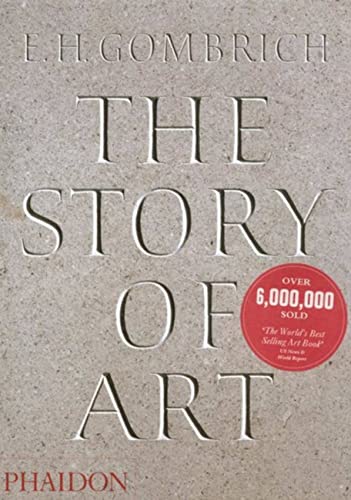
The Story of Art
E.H. Gombrich
The world's most popular introduction to art — Gombrich's masterful narrative takes readers from prehistoric cave paintings to the twentieth century, making the history of art feel alive and necessary.
View on AmazonExplore other subjects
Foundations
Humanities & Arts