
Logic
Reason
Logic for Curious Minds
Expanded Edition — Including Bonus Chapter on Practical Tools for Sharper Reasoning
Introduction
Logic is the study of how we move from what we already believe or observe to new conclusions that are worth trusting. It is the difference between a chain of thought that holds together and one that collapses under scrutiny. Understanding logic does not turn you into a machine. It simply gives you clearer tools for noticing when a claim is well supported, when it is shaky, and when the language itself is doing most of the persuasive work.
Most people already sense that some arguments feel solid while others feel slippery. What is often missing is a shared vocabulary and a few reliable habits for testing that feeling. Why does one explanation leave you more confident while another leaves you uneasy? Why do some patterns of reasoning lead to better decisions over time while others repeatedly lead people into the same traps? The answers lie in the basic structure of good reasoning, not in clever rhetoric or the latest viral claim.
This guide is written for curious readers who want accurate information without unnecessary complexity. You do not need a background in philosophy or mathematics. You only need the willingness to look at your own thinking with the same care you might give to a practical skill. Clear thinking and everyday enjoyment of conversation, news, and decision-making are not in conflict. In fact, the more clearly you understand how arguments work, the easier it becomes to engage with ideas without being pushed around by them.
We start with the basic building blocks of an argument — premises and conclusions — because almost every claim you encounter can be examined through that simple structure. From there we look at two major families of reasoning: deductive arguments that aim for certainty and inductive arguments that deal in degrees of support. Later chapters examine the most common ways reasoning goes wrong (fallacies), the role of language and ambiguity, how probability and uncertainty fit into everyday judgment, the systematic distortions known as cognitive biases, and practical methods for evaluating claims. The final chapters turn to application: how to use these tools in ordinary life without becoming pedantic or paralysed.
A few principles guide everything that follows. No single form of reasoning is magic, and no single counter-example is decisive in every case. Context, the quality of the evidence, and the rest of the surrounding claims matter far more than any isolated technique. The mind is adaptable. Careful thinking can be strengthened with practice across a wide range of topics, just as physical fitness can improve with consistent effort. Consistency across months and years of asking better questions is more important than never making a mistake on any single day.
The goal is competence rather than cleverness. By the end of this material you should be able to look at a claim or an argument and understand, in broad terms, what would make it stronger or weaker, and you should feel more confident separating solid reasoning from persuasive noise. Let's begin with the foundations.
Chapter 1
What Logic Is and Why It Matters
Logic is the systematic study of the principles of valid inference and correct reasoning. In everyday terms, it is the set of tools that help us distinguish good arguments from bad ones. It does not tell us what to believe about the world. It tells us whether the reasons offered for a belief actually support that belief.
When people say "that doesn't follow" or "you're jumping to conclusions," they are already using informal logical judgment. Formal study simply makes those intuitions more precise and more reliable. Logic is not about winning debates or sounding smart. It is about reducing the chance that we will be misled — by others or by ourselves. It is a form of intellectual self-defence that also improves the quality of the conversations we choose to have.
Logic Is Not the Same as Truth
A crucial distinction runs through everything that follows: an argument can be logically valid yet reach a false conclusion if its starting points are false. Conversely, an argument can reach a true conclusion by accident even if the reasoning is flawed. Logic concerns the relationship between premises and conclusion, not the independent accuracy of the premises themselves.
This is why logic is often described as content-neutral. The same logical structure can appear in discussions of science, politics, personal decisions, or everyday practical matters. The tools travel well. You can use the same patterns to evaluate a medical claim, a financial proposal, or a friend's advice about a relationship. What changes is the content and the quality of the evidence, not the underlying question of whether the reasons support the conclusion.
Why Clear Reasoning Matters
We live in an environment saturated with claims: news stories, social media posts, advertisements, advice from friends, expert opinions, and our own internal narratives. Many of these claims come with supporting reasons, or at least with the appearance of reasons. Without some ability to test those reasons, we are left relying on tone, familiarity, emotional impact, or the identity of the speaker.
Better reasoning does not guarantee better outcomes in every case. Chance, incomplete information, and competing values all play roles. What better reasoning does provide is a higher baseline. Over time, people who consistently check whether conclusions actually follow from the evidence tend to make fewer avoidable errors and to update their views more accurately when new information arrives. The improvement is often quiet and cumulative rather than dramatic.
Two Broad Families of Reasoning
Most everyday reasoning falls into one of two large categories. Deductive reasoning aims for conclusions that must be true if the premises are true. When the structure is correct, the conclusion is locked in. Classic examples include mathematical proofs and certain tightly structured arguments in philosophy or law. Inductive reasoning aims for conclusions that are made more probable or better supported by the premises, without guaranteeing them. Scientific inference, medical diagnosis, weather forecasting, and most practical decision-making rely heavily on inductive patterns.
Both are valuable. Confusing the standards appropriate to one with the standards appropriate to the other is a common source of confusion. Demanding deductive certainty in an inductive domain leads to paralysis or to rejecting useful evidence. Treating inductive support as if it were certainty leads to overconfidence.
Key Takeaways
- Logic studies the relationship between reasons and conclusions, not the independent truth of every claim.
- A valid argument can still be wrong if its premises are false; a true conclusion can still rest on weak reasoning.
- Clearer reasoning improves the quality of decisions over time without guaranteeing perfection.
- Deductive and inductive reasoning serve different purposes and should be evaluated by different standards.
Chapter 2
Arguments — The Basic Structure of Reasoning
An argument, in the logical sense, is not a quarrel. It is a set of statements in which some (the premises) are offered as reasons for accepting another (the conclusion). Almost every attempt to persuade, explain, or justify can be examined by identifying these parts. Learning to see the skeleton of an argument is one of the highest-leverage skills in critical thinking.
Premises and Conclusions
The conclusion is the claim the speaker wants you to accept. The premises are the supporting reasons. In ordinary speech the conclusion is often signalled by words such as "therefore," "so," "hence," "thus," or "it follows that." Premises may be introduced by "because," "since," "given that," or simply presented as facts. Sometimes the conclusion appears first and the reasons follow; sometimes the order is reversed. The logical relationship matters more than the surface order.
Many everyday arguments leave some premises unstated. These are called enthymemes. The missing premise is often something the speaker assumes the audience already accepts. Making the hidden premise explicit is one of the most useful diagnostic moves in critical thinking. Once it is visible, you can ask whether it is actually true or widely shared. Many disagreements dissolve, or at least become clearer, when the unstated assumption is brought into the open.
Simple and Complex Arguments
A simple argument has one conclusion supported by one or more premises. A complex argument may contain sub-arguments, where an intermediate conclusion serves as a premise for a further conclusion. Mapping the structure — even roughly on paper or in your head — often reveals whether the reasoning actually connects or whether there are gaps. Complex arguments are common in longer essays, legal opinions, and policy discussions. Taking a moment to outline the main steps prevents you from getting lost in the details.
Standard Form
Putting an argument into standard form means listing the premises in order and then stating the conclusion, often marked by a line or the word "therefore." This removes rhetorical flourishes, emotional colouring, and digressions, and makes the logical skeleton visible. Once the skeleton is clear, it becomes much easier to ask the two central questions of logical evaluation: Do the premises support the conclusion? And are the premises themselves acceptable? The first question is about logical structure. The second is about the quality of the starting points.
Arguments Versus Explanations
Not every set of statements that looks like an argument is trying to prove a conclusion. Sometimes the speaker is offering an explanation of why something already accepted is the case. The difference matters. An explanation assumes the truth of the thing being explained; an argument tries to establish it. Mixing the two can lead to circular reasoning or to talking past one another. When someone says "The reason the window is broken is that a ball hit it," they are usually explaining an accepted fact, not arguing that the window is broken. Recognising the difference keeps the conversation on track.
Key Takeaways
- An argument consists of premises offered as support for a conclusion.
- Many everyday arguments leave premises unstated; making them explicit improves evaluation.
- Putting an argument into standard form reveals its logical structure.
- Distinguish arguments (which try to prove) from explanations (which assume what they explain).
Chapter 3
Deductive Logic — When Conclusions Follow with Certainty
Deductive arguments aim for a special kind of strength: if the premises are true, the conclusion must be true. There is no room left for the conclusion to be false. When a deductive argument achieves this, it is called valid. When it is valid and all its premises are in fact true, it is called sound. This pair of concepts — validity and soundness — is one of the most useful distinctions in all of logic.
Validity and Soundness
Validity is about structure. A valid argument can have false premises and a false conclusion; what matters is that the conclusion is locked in by the premises. Soundness requires both validity and true premises. Only sound arguments give us guaranteed true conclusions. This distinction is powerful. It lets us separate two different kinds of criticism. We can say "even if everything you just said were true, your conclusion still wouldn't follow" (an attack on validity). Or we can say "your reasoning is tight, but one of your starting points is wrong" (an attack on soundness). Keeping the two criticisms distinct prevents conversations from becoming confused.
Common Valid Forms
Certain patterns appear repeatedly because they are reliably valid. Modus ponens: If P, then Q. P. Therefore Q. Modus tollens: If P, then Q. Not Q. Therefore not P. Hypothetical syllogism: If P, then Q. If Q, then R. Therefore if P, then R. Disjunctive syllogism: Either P or Q. Not P. Therefore Q. These forms are content-neutral. They work equally well with everyday claims, scientific hypotheses, or abstract statements. Once you recognise the pattern, you can see the same structure underneath very different surface language.
Invalid Forms That Look Tempting
Two common errors mimic the valid forms above. Affirming the consequent: If P, then Q. Q. Therefore P. (Invalid.) Denying the antecedent: If P, then Q. Not P. Therefore not Q. (Invalid.) Both are easy to slip into because they feel similar to the valid patterns. Recognising them is a high-value skill. They appear frequently in casual conversation, in advertising, and even in some formal writing. Naming the pattern makes the error easier to spot and harder to repeat.
When Deduction Is Useful
Deductive reasoning is especially powerful when we are working from definitions, mathematical relationships, or tightly constrained rules. It is less common as the sole method in open empirical questions, where the premises themselves are usually established inductively. In practice, most interesting reasoning mixes the two: we use induction to establish the premises and deduction to draw out their consequences. Understanding the difference keeps the standards of evaluation clear.
Key Takeaways
- A deductive argument is valid when the truth of the premises guarantees the truth of the conclusion.
- A sound argument is valid and has true premises.
- Classic valid forms include modus ponens, modus tollens, and the hypothetical and disjunctive syllogisms.
- Affirming the consequent and denying the antecedent are common invalid look-alikes.
Chapter 4
Inductive Logic — Reasoning from Evidence and Patterns
Most of the reasoning we do in ordinary life and in the sciences is inductive. The premises make the conclusion more likely or better supported, but they do not guarantee it. New evidence can always weaken or overturn an inductive conclusion. This is not a defect; it is the appropriate form of reasoning when we are dealing with an open and changing world.
Strength and Cogency
Instead of validity and soundness, inductive arguments are evaluated in terms of strength and cogency. A strong inductive argument makes the conclusion highly probable given the premises. A cogent argument is strong and has acceptable premises. Strength comes in degrees; there is no sharp line between "strong enough" and "too weak." The evaluation is always comparative and contextual. What counts as strong support in one domain or for one purpose may be inadequate in another.
Common Inductive Patterns
Generalisation from samples: We observe that a sample of a population has a certain feature and conclude that the population as a whole probably has it. The quality of the sample (size, representativeness, method of selection) determines how strong the inference is. A large, randomly selected sample is far more informative than a small convenience sample.
Analogical reasoning: Two things share several relevant features; therefore they probably share another feature. The strength depends on the number and relevance of the shared features and on the absence of relevant differences. Good analogies are useful; forced or superficial ones mislead.
Inference to the best explanation (sometimes called abduction): We have a set of observations; several hypotheses could explain them; we conclude that the hypothesis that best explains the data is the most likely to be true. "Best" usually involves simplicity, coherence with background knowledge, and explanatory power. This pattern is central to scientific reasoning and to everyday diagnosis of problems.
Causal reasoning: We observe correlations and temporal sequences and infer causal connections. Establishing causation is harder than establishing correlation and usually requires ruling out alternative explanations, confounders, and reverse causation. The difference between "A is associated with B" and "A causes B" is one of the most important distinctions in practical reasoning.
The Problem of Induction
Inductive reasoning rests on the assumption that the future will, in relevant respects, resemble the past, or that unobserved cases will resemble observed ones. This assumption cannot itself be proved deductively without circularity. In practice we rely on it because it has worked, and because we have no alternative that performs better. Awareness of the limitation keeps us appropriately modest about the certainty of inductive conclusions. It also reminds us to remain open to revision when the patterns change.
Key Takeaways
- Inductive arguments support conclusions to a greater or lesser degree; they do not guarantee them.
- Strength and cogency are the inductive counterparts of validity and soundness.
- Common patterns include generalisation, analogy, inference to the best explanation, and causal inference.
- All induction rests on the fallible assumption that patterns will continue; this is a feature, not a bug, of reasoning about the world.
Chapter 5
Common Fallacies — How Arguments Go Wrong
A fallacy is a recurring pattern of reasoning that looks persuasive but is logically flawed. Learning the most common fallacies does not turn every conversation into a hunt for errors. It does give you a set of diagnostic labels that make it easier to notice when an argument has gone off the rails. The goal is clearer evaluation, not point-scoring.
Fallacies of Relevance
These occur when the premises are not actually relevant to the conclusion, even if they are emotionally powerful or factually true. Ad hominem: Attacking the person instead of the argument. The personal qualities of the speaker rarely settle whether the claim is true. Straw man: Misrepresenting an opponent's position so that it is easier to attack. The weaker version is refuted, but the original claim remains untouched. Appeal to emotion: Using fear, pity, flattery, or anger in place of relevant evidence. Red herring: Introducing an irrelevant topic that distracts from the original issue. Appeal to authority: Treating an expert's opinion as decisive outside their domain, or treating any authority as beyond challenge.
Fallacies of Ambiguity
Equivocation: Using a key word in two different senses within the same argument. Amphiboly: Exploiting grammatical ambiguity so that a sentence can be read in more than one way. These fallacies are especially common in advertising, political rhetoric, and casual conversation where a shift in meaning does unnoticed persuasive work.
Fallacies of Presumption
Begging the question (circular reasoning): Assuming the conclusion in the premises. False dilemma: Presenting only two options when more exist. Slippery slope: Claiming that one step will inevitably lead to a chain of undesirable consequences without adequate evidence for the links. Hasty generalisation: Drawing a broad conclusion from too small or too biased a sample. Post hoc ergo propter hoc: Assuming that because A preceded B, A caused B. These patterns smuggle in assumptions that have not been justified.
Using Fallacy Labels Carefully
Naming a fallacy is useful only when it accurately diagnoses a real weakness. Over-eager labelling can itself become a fallacy (the fallacy fallacy: assuming that because an argument contains a fallacy, its conclusion must be false). An argument can contain a fallacy and still reach a true conclusion, just as a valid argument can reach a false one if the premises are wrong. The goal is clearer evaluation, not a scorecard of who committed more named errors.
Key Takeaways
- Fallacies are recurring patterns of flawed reasoning that often look persuasive.
- Relevance fallacies use material that does not actually bear on the conclusion.
- Ambiguity fallacies exploit shifts in meaning or grammar.
- Presumption fallacies smuggle in unwarranted assumptions.
- Identifying fallacies is a diagnostic tool, not a weapon.
Chapter 6
Language, Ambiguity, and Clarity
Logic works with statements that have reasonably clear meaning. When language is vague, ambiguous, or loaded, even a formally valid argument can become practically useless. Clear thinking therefore requires attention to the words themselves. Many disputes that appear to be about facts or values are actually about the meanings of key terms.
Vagueness and Ambiguity
Vague terms have borderline cases (how many hairs make a person bald? When does a hill become a mountain?). Ambiguous terms have two or more distinct meanings. Both can cause arguments to talk past each other. Asking "What exactly do you mean by that word in this context?" is often the most productive move available. It is not pedantry; it is the precondition for productive disagreement.
Loaded Language and Framing
Words carry connotations as well as denotations. Describing the same policy as "tax relief" or "tax cuts for the wealthy," or the same action as "enhanced interrogation" or "torture," steers the audience before any argument is offered. Noticing the framing is part of evaluating the claim. The same facts can be packaged in language that invites very different emotional and moral responses. Good reasoning requires seeing past the packaging to the underlying content.
Definitions
Stipulative definitions assign a meaning for the purpose of discussion. Lexical definitions report ordinary usage. Precising definitions reduce vagueness for a specific purpose. Theoretical definitions embed a term in a larger explanatory framework. Good arguments often begin by making the key terms explicit so that later disagreement is about substance rather than terminology. When two people use the same word with different meanings, no amount of logical structure will produce a shared conclusion.
Operational Clarity
In practical contexts it is often useful to ask what observable difference the claim would make. If two people use the same word but would count different observations as confirming or disconfirming it, they are not yet talking about the same thing. This operational test is especially helpful in discussions of complex or abstract concepts such as "freedom," "fairness," "harm," or "success."
Key Takeaways
- Vague and ambiguous language undermines even formally correct reasoning.
- Loaded terms and framing can do persuasive work before any argument begins.
- Making key definitions explicit prevents many pointless disputes.
- Asking what observable difference a claim would make improves clarity.
Chapter 7
Probability, Uncertainty, and Degrees of Belief
Most interesting claims about the world are not certain. Logic that deals only in true and false leaves us poorly equipped for ordinary judgment. Probability gives us a way to reason with degrees of confidence. It allows us to say "this is more likely than that" or "the evidence raises the probability of this hypothesis" without pretending to certainty we do not possess.
Probability as Degree of Belief
In the Bayesian tradition, probability represents a rational agent's degree of belief given the available evidence. Evidence raises or lowers the probability of a hypothesis. The mathematics of probability then constrains how those degrees of belief should be updated if we wish to remain coherent. You do not need to perform formal calculations in everyday life, but the underlying idea — that confidence should move in proportion to the strength and relevance of new evidence — is widely applicable.
Base Rates and Conditional Probability
A common error is to ignore the base rate — the prior frequency of a phenomenon — when interpreting new evidence. The probability of a hypothesis given the evidence depends on both the strength of the evidence and how common the hypothesis was to begin with. Medical testing, legal evidence, and risk assessment all require this discipline. A positive test result for a rare condition is far less informative than the same result for a common one, unless the test is extraordinarily accurate.
Expected Value and Decision-Making
When outcomes have both probabilities and values (gains or losses), expected value offers a way to compare options. It does not dictate what a person should prefer — values remain personal — but it does make the trade-offs explicit. Multiplying the probability of each outcome by its value and summing the results gives a single figure that can be compared across alternatives. Even a rough qualitative version of this thinking ("this option has a small chance of a large gain and a large chance of a modest loss") improves clarity.
Living with Uncertainty
Good reasoning under uncertainty does not eliminate doubt. It calibrates it. It distinguishes between "I have no idea" and "the evidence currently points this way with roughly this confidence." That calibration is itself a skill that improves with practice and feedback. People who are well calibrated know roughly how often their high-confidence judgments turn out to be correct and adjust accordingly.
Key Takeaways
- Most real-world claims are probabilistic rather than certain.
- Probability can represent degrees of belief that should be updated with evidence.
- Ignoring base rates is a frequent and consequential error.
- Expected value helps compare options when both likelihood and value matter.
- The goal is better calibration of confidence, not the elimination of uncertainty.
Chapter 8
Cognitive Biases — The Hidden Distortions in Thinking
Even when we know the principles of good reasoning, our minds have systematic tendencies that pull us away from them. These tendencies are called cognitive biases. They are not signs of stupidity; they are side-effects of mental shortcuts that usually work well enough in ordinary environments. The problem arises when the shortcuts are applied in situations where they systematically mislead.
Some High-Impact Biases
Confirmation bias: The tendency to search for, interpret, and remember information that confirms existing beliefs, while giving less scrutiny to disconfirming evidence. Availability heuristic: Judging the frequency or probability of events by how easily examples come to mind. Dramatic or recent events are overweighted. Anchoring: Relying too heavily on the first piece of information encountered when making estimates. Sunk-cost fallacy: Continuing a course of action because of resources already invested, rather than on the basis of future costs and benefits. Overconfidence: Placing more confidence in one's judgments than the evidence warrants. Motivated reasoning: Allowing preferred conclusions to influence the evaluation of evidence.
These biases appear across domains — personal finance, politics, health decisions, relationships, and professional judgments. They are not rare pathologies; they are the normal operating characteristics of human minds under ordinary conditions.
Bias Is Not Destiny
Knowing the names of biases does not automatically eliminate them. What helps is building habits and environments that counteract them: deliberately seeking disconfirming evidence, using checklists, slowing down for high-stakes judgments, and exposing one's reasoning to people who do not share the same starting assumptions. Outside perspectives are especially valuable because the bias blind spot makes it easier to see distortions in others than in ourselves.
The Bias Blind Spot
Most people recognise that biases exist and can spot them in others more readily than in themselves. This asymmetry is itself a bias. Treating one's own reasoning as a work in progress rather than a finished product is one of the more useful meta-habits. It does not require self-doubt about everything; it requires a standing willingness to examine the process by which one reached a conclusion.
Key Takeaways
- Cognitive biases are systematic deviations from normative reasoning produced by mental shortcuts.
- Confirmation bias, availability, anchoring, sunk costs, overconfidence, and motivated reasoning are among the most consequential.
- Awareness alone is rarely enough; structural habits and outside perspectives help more.
- We are better at detecting bias in others than in ourselves.
Chapter 9
Evaluating Claims and Evidence
Putting the preceding tools together yields a practical sequence for examining claims. The sequence is not rigid; it is a set of questions that can be asked in different orders depending on the situation. The important point is to move beyond the immediate persuasive force of a claim and to examine its logical and evidential support.
A Working Sequence
- Clarify the claim. What exactly is being asserted? Can it be stated in a single clear sentence?
- Identify the argument structure. What premises are offered? Are any left unstated?
- Check relevance and support. Do the premises actually bear on the conclusion? How strong is the link?
- Examine the quality of the evidence. Is it first-hand or second-hand? Is the sample adequate? Are there obvious alternative explanations?
- Consider the source and incentives. Expertise, track record, and conflicts of interest are relevant data, not automatic disqualifiers or endorsements.
- Look for disconfirming evidence. What would count against the claim, and has that been checked?
- Calibrate confidence. Given everything above, how strongly should one hold the conclusion for now?
Evidence Hierarchies Are Contextual
In medicine, large randomised trials sit near the top of many evidence hierarchies. In history, contemporary documents and multiple independent attestations carry weight. In everyday practical matters, direct experience and simple track records often dominate. The appropriate standard depends on the domain and the stakes. Applying a medical standard of evidence to a casual practical question, or a casual standard to a medical one, produces predictable problems.
Absence of Evidence
"Absence of evidence is not evidence of absence" is sometimes true and sometimes false. If a thorough, well-designed search would have been expected to turn up evidence, then the failure to find it does lower the probability of the claim. If little or no serious search has been made, the absence of evidence tells us very little. Context again determines the force of the point. The same slogan can be used responsibly or as a way of protecting a claim from any demand for support.
Key Takeaways
- A systematic sequence — clarify, structure, check support, examine evidence, consider incentives, seek disconfirmation, calibrate — improves evaluation.
- Appropriate standards of evidence vary by domain.
- Absence of evidence sometimes counts against a claim and sometimes does not; the difference lies in whether evidence should have been found.
Chapter 10
Putting Logic to Work in Everyday Life
The point of studying logic is not to win arguments or to police other people's speech. It is to improve the quality of one's own thinking and the quality of the conversations one chooses to have. The tools are most valuable when they are used with a spirit of inquiry rather than combat.
Practical Habits
Slow down on high-stakes claims. Speed is often the enemy of accuracy. Ask "What would change my mind?" before diving into defence of a view. Prefer specific, falsifiable claims over vague or unfalsifiable ones. Separate the question "Is this person trustworthy?" from the question "Is this particular claim well supported?" In disagreement, restate the other person's position in terms they would accept before criticising it (steel-manning). Update incrementally. Large, sudden reversals are less common than gradual shifts in confidence.
These habits are simple to state and difficult to practise consistently. The difficulty is not intellectual; it is emotional and social. We like to be right, we dislike admitting error, and we often care more about belonging to a group than about the precise accuracy of a particular claim. Logic does not remove those pressures; it gives us a way to notice them and to counteract them when the cost of error is high.
Conversation Versus Combat
Not every discussion is a debate that needs a winner. Many are opportunities to exchange information, to test ideas, or simply to understand another perspective. Applying logical tools in a spirit of joint inquiry usually produces better results than applying them as weapons. The same person who becomes defensive when challenged may become thoughtful when invited to explore a question together.
Knowing When Enough Is Enough
Perfect reasoning is not required for most decisions. At some point the cost of further analysis exceeds the expected benefit. Good judgment includes recognising that point. Logic is a set of tools; wisdom includes knowing which tool is worth reaching for and when further sharpening of the analysis is no longer useful. Overthinking can be as costly as underthinking.
Key Takeaways
- The primary use of logic is self-improvement and better conversation, not victory.
- A small number of habits — slowing down, asking what would change one's mind, preferring falsifiable claims, steel-manning, incremental updating — yield most of the practical benefit.
- Not every exchange is a contest; many are collaborative.
- Knowing when further analysis is no longer worth the cost is itself part of good judgment.
Bonus Chapter
Practical Tools and Resources for Sharper Reasoning
Important caveats before any list. No book, checklist, or course can replace the slow accumulation of careful practice. Tools are useful only when they are actually used. The suggestions below are starting points, not a complete curriculum. Always treat any single source — including this one — as fallible. Cross-check important claims. Prefer primary sources and high-quality secondary sources over summaries when the stakes are high.
1. Core Reference Books
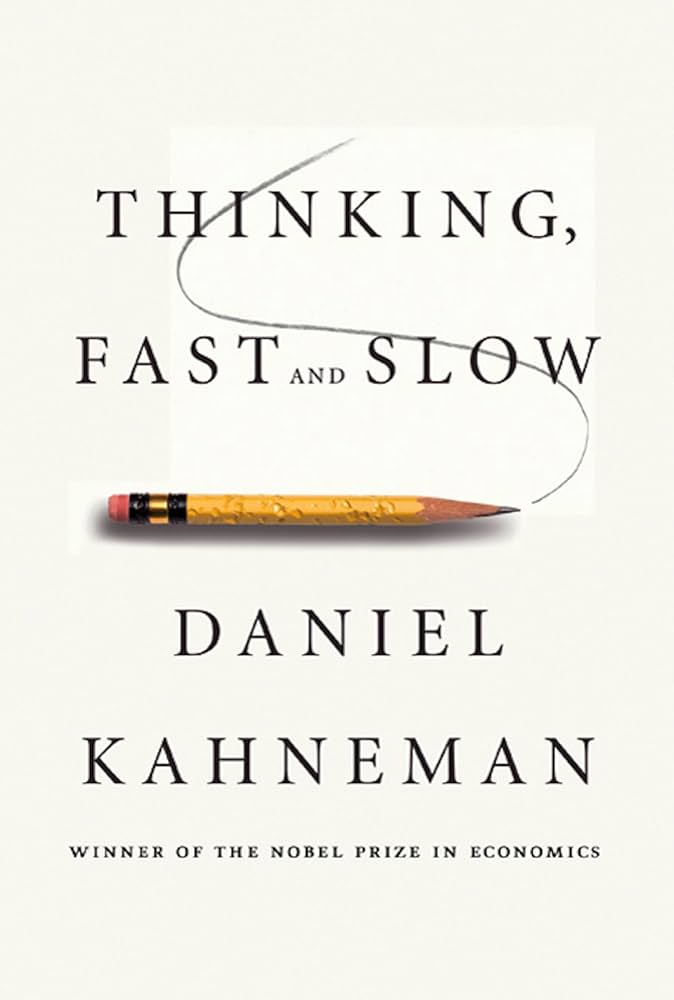
Clear, well-regarded introductions that repay careful reading: "Thinking, Fast and Slow" by Daniel Kahneman — indispensable on cognitive biases and dual-process thinking. "The Scout Mindset" by Julia Galef — practical guidance on seeking truth rather than defending prior beliefs. "Attacking Faulty Reasoning" by T. Edward Damer — systematic treatment of fallacies with a constructive emphasis. "An Introduction to Formal Logic" by Peter Smith — for those who want the formal apparatus without excess. "Superforecasting" by Philip Tetlock and Dan Gardner — how the best forecasters actually reason under uncertainty.
2. Online Resources and Communities
The Stanford Encyclopedia of Philosophy (free, high-quality entries on logical topics). LessWrong and the broader rationality community — uneven but often excellent discussions of reasoning under uncertainty. Your local library or university library access to journals and books remains one of the highest-leverage resources available. Many universities also offer free or low-cost online courses in critical thinking and introductory logic.
3. Practical Exercises
- Keep a decision journal: record important judgments, the reasons for them, and the outcome. Review periodically.
- Practice steel-manning: before criticising a view, write the strongest version of it you can.
- When you encounter a strong emotional reaction to a claim, pause and ask what evidence would move you the other way.
- Take a single news article or opinion piece each week and put its central argument into standard form.
4. Checklists for High-Stakes Thinking
- Have I made the claim and the supporting reasons explicit?
- What is the strongest contrary evidence I know of?
- What base rates or prior probabilities am I assuming?
- Am I treating a possibility as a certainty (or vice versa)?
- What would I say if someone I respect held the opposite view?
5. Final Reminder
The most powerful strategy remains the pattern outlined in Chapters 1–10: make structure visible, check support, examine evidence quality, notice language and bias, calibrate confidence, and remain willing to update. Tools and books are secondary. The primary work is the repeated, ordinary practice of asking whether the reasons actually support the conclusion. When chosen carefully and used consistently, the resources above can accelerate that practice. They cannot replace it.
Conclusion: Thinking as a Skill and a Habit
Logic is the practical discipline of checking whether the reasons we offer or accept actually support the conclusions we draw. Across the preceding chapters we have examined the basic structure of arguments, the difference between deductive certainty and inductive support, the most common ways reasoning fails, the role of language, the handling of uncertainty, the systematic distortions of cognitive bias, and methods for evaluating claims in ordinary life.
The central message is straightforward. Better reasoning is a skill that can be strengthened. It rests on a small set of durable habits: making the structure of an argument explicit, checking whether the premises support the conclusion, examining the quality of the evidence, noticing when language is doing hidden work, calibrating confidence to the strength of the support, and remaining open to revision when better information arrives.
These habits are compatible with a wide range of temperaments and values. They do not require emotional detachment or the abandonment of commitments. They simply make it less likely that we will be carried along by rhetoric, by the desire to be right, or by the unnoticed shortcuts of the mind.
Consistency across months and years matters far more than brilliance on any single day. Small, repeated improvements in how one examines claims compound. The goal is not to become incapable of error. It is to become someone who notices errors sooner, corrects them more readily, and helps others do the same when the conversation allows it.
The most useful step most people can take is to begin treating their own reasoning as something that can be inspected and improved — the same way one might gradually improve a practical craft. Asking better questions of the claims one encounters, and of the claims one is tempted to make, is the everyday practice that turns the principles of logic into a living habit.
Clear thinking is a tool, not a set of commandments. Used well, it supports both better decisions and a more honest relationship with one's own mind. That combination — informed, flexible, and sustainable — is the durable foundation for reasoning well across a lifetime.
Further Reading
Thinking, Fast and Slow
Daniel Kahneman
The landmark book on how we think — covering cognitive biases, dual-process reasoning, and the systematic errors that shape our judgments. Essential reading for anyone who wants to understand their own mind.
View on AmazonExplore other subjects
Foundations
Social Sciences
Humanities & Arts