
Music
How Music Works
Music for Curious Minds
An introduction to sound, listening, and why music moves us
Introduction
Music is organised sound in time. That is the dry sentence. The living fact is stranger and kinder: a few tones, a pulse, a human voice, and suddenly a room changes temperature. People who cannot agree about politics will sing the same chorus. People who cannot say what they feel will put a song on and let it speak for them.
You already know music from the inside. You have a private soundtrack, even if you never learned a note. There are tracks that belong to a kitchen, a journey, a grief, a friendship. This book is not an attempt to replace that knowledge with theory. It is an attempt to make the knowledge clearer, so that listening becomes a little less automatic and a little more alive.
We will walk through what sound is doing when it becomes music, why people make it at all, how pitch and rhythm work, what melody and harmony are for, how voices and instruments cooperate, how styles and traditions differ, and how to listen without turning the experience into homework. Then we will look at feeling and memory, at music's public life, and at the ordinary ways it still holds a day together.
You do not need to play an instrument. Players have one kind of understanding. Listeners have another. Both are real. A person who can hear when a song is about to change, or when a singer means it, already possesses the beginning of musicianship.
There will be no exam and no approved playlist. If a term helps you notice something, keep it. If it gets in the way, drop it and go back to the sound. Music forgives a messy education. What it does not forgive, or at least does not reward, is never quite arriving.
Think of the book as a set of porch lights, not a syllabus. You can skip a chapter and still find the door. What I want is only that the next song you meet has a little more space around it.
Bring your own ears and your own history. The song that formed you at fourteen still counts. So does the piece you have not met yet. A primer is only useful if it makes room for both.
Chapter 1
What Music Actually Is
Music is sound arranged so that time feels shaped. Noise happens. Music is noise that someone has asked to return, to wait, to rise, to land. The arrangement can be a drum pattern older than writing or a symphony that needs a hundred people. The scale changes. The idea does not.
Not every culture draws the line between music and the rest of life in the same place. Some languages barely separate song from poetry or prayer. Some traditions treat work chants, street cries, and lullabies as music without needing a concert hall to prove it. If your picture of music is only a stage and a silent audience, you have been shown one room of a large house.
Silence, Intention, and Agreement
Silence belongs inside the definition. Music is not wall-to-wall sound. It is sound and the meaningful absence of sound. A rest can be as eloquent as a note. People who fill every second are not making more music. They are often making less, because they have thrown away one of the materials.
Is birdsong music? Is a heartbeat? Is a well-timed door slam in a film score? The arguments are old and not very important for daily life. What matters is human intention and human hearing. We take sound and we mean something by the way we shape it. Then another person recognises the shaping. That recognition is the art.
A Social Agreement
Music is also a social agreement. A scale, a groove, a style — these are shared habits of attention. You can invent privately, but the invention becomes music-in-the-world when someone else can enter it. Even a hermit singing in a field is using a voice trained by other voices.
It is not the same as talent, and it is not the same as taste. Talent is a facility some bodies and ears have. Taste is a history of what you have loved. Music is the thing itself: the organised event in time. You can lack formal talent and still live a musical life. You can have great facility and still listen poorly.
If you need a pocket definition, try this one and then forget it when the music starts: music is meaningful pattern in sound, offered from one time-bound creature to another.
The phrase "time-bound" matters. Music happens, and then it is gone, unless memory or a recording catches a trace. That vanishing is not a flaw. It is why a live night cannot be hoarded, and why people keep going back.
By the end of this chapter, music should look less like a school subject and more like a human practice. It is sound given a shape that another person can inhabit.
Chapter 2
Why Humans Make Music
We make music because we are rhythmic animals with feelings that will not sit still. Before writing, before cities, there was the pulse of walking, pounding grain, rocking a child. Song rides those pulses. It makes labour bearable and rest communal. It turns a group of separate bodies into something that can start and stop together.
Comfort is part of it. A lullaby is a technology for sleep. A lament is a technology for grief that would otherwise have no channel. People who say music is a luxury have not been in a house after a death, or in a car at night when a song is the only honest company available.
Display, Belonging, and Play
Display is part of it too. Courtship, status, skill — music has always been a way to be seen and chosen. That does not make it shallow. Peacocks are not shallow. They are doing what their form of life requires. Humans happen to do some of their display in time signatures.
Belonging is the public face of the same need. Anthems, hymns, terrace chants, protest songs, wedding dances: these are ways of saying we. The we can be generous or ugly depending on who is allowed in. Music does not automatically make people better. It makes them more together. What they are together for is another question.
Play is the part respectable theories sometimes skip. People make music because it is a pleasure to lock into a groove, to stack a harmony, to find a note that was almost not there. The pleasure is not an extra. It is one of the reasons the practice survived.
Meaning, Memory, and Work
Meaning is the part that will not stay practical. A song can seem to tell the truth about a life in three minutes. It can bless a morning or accuse a government. It can do this without an argument, which is why it travels through people who would never finish an essay on the same subject.
We also make music to keep the dead nearby and the future imaginable. Requiems and lullabies face opposite directions and use some of the same tools. Time is music's medium and also its subject. Every piece is a small model of passing and return.
Work songs belong in this company too. Rowing, harvesting, marching, hauling nets: the song sets a pace that many bodies can share. Efficiency and consolation arrive together. That double job is one of music's oldest tricks.
By the end of this chapter, the motives should look human rather than grand. We sing to work, to soothe, to belong, to show off, to play, and to tell the truth when speech is too thin.
Chapter 3
Sound, Pitch, and Rhythm
Sound is vibration in a medium, usually air, that reaches the ear and becomes a sensation. Pitch is how high or low we hear that vibration. Rhythm is how events are placed in time. If you have those three, you already have the bones of music. Everything else is a way of dressing the bones.
Pitch is not a law of nature in the sense that only one set of notes is real. Different traditions divide the space between low and high differently. Some use small steps you might first hear as sliding or "out of tune" if you grew up on piano keys. They are not mistakes. They are another map of the same mountain.
Scales, Rhythm, and Meter
A scale is a chosen set of pitches that a piece will treat as home. Once you have a home, you can leave it and come back, which is a lot of what melody does. The feeling of tension and rest that people describe in music is often just this: away from home, toward home, delayed home, home at last.
Rhythm is older in the body than pitch is in the theory books. You can feel a pulse without naming a time signature. Strong and weak beats, syncopation that leans against the pulse, a tempo that walks or runs or drags — these are physical facts before they are notations. If you ever tapped a foot without deciding to, you were already literate.
Meter is the grouping of beats. Waltz feel, march feel, the long unfolding of a pulse that never quite sits in four — each grouping is a different gait. Dancers know this in their sleep. Listeners know it too, even when they could not write it down.
Timbre and Practical Listening
Timbre is the colour of a sound: why a violin is not a flute playing the same pitch, why one singer is velvet and another is grain. Much of what we call taste is taste in timbre. People will forgive a simple tune if the sound of it loves them.
You do not need to fear these words. They are nicknames for things you have heard your whole life. Use them when they help you point. Put them back in the drawer when the music is actually on.
Pitch and rhythm can be trained, but they are not reserved for the trained. If you can tell a question from a statement in someone's voice, you already hear pitch doing social work. Music only makes that work explicit and repeatable.
By the end of this chapter, the raw materials should be visible. Music is made of pitch, time, and colour of sound. Traditions differ in how they cut those materials. The ear can learn new cuts.
Chapter 4
Melody, Harmony, and Texture
Melody is the part that can walk away by itself. It is the tune you take into the street. A good melody has a sense of leaning and arriving, even if you cannot say why. It is a sentence in pitch: it goes out and it comes home, or it refuses to come home and that refusal is the point.
Not every music puts melody first. Some traditions build from rhythm and colour, with the voice used more as percussion or texture than as a carrier of a singable line. If you have been trained to wait for "the tune," those musics can sound like they have not started. They have started. You are listening for the wrong character.
Harmony and Texture
Harmony is what happens when pitches sound together and make a climate. A chord can feel stable or unstable, sweet or sour, open or crowded. Western popular and classical music have made harmony a central drama: the song moves through climates and the last climate feels like a destination. Other musics may hold one climate for a long time and do their travelling in rhythm or in the unfolding of a mode.
Texture is the weave. One voice alone is a thread. Several voices in the same rhythm are a braid. Several voices doing different jobs — a bass that walks, a tune that floats, a drum that argues — are a cloth. When people say a recording sounds "full" or "thin," they are talking about texture, whether they know the word or not.
Counterpoint and Repetition
Counterpoint is the art of more than one melody at once, each with a life of its own. It can be formal and learned. It can also be two singers in a kitchen who have done this so long they no longer think about it. Independence plus agreement: that is the pleasure.
Repetition and variation are how these elements become form. Hear a line. Hear it again with a small change. Hear it refuse to return. The mind loves this game. Too little variation and we glaze. Too little repetition and we cannot find the door. Most music you love has found a living ratio between the two.
If analysis starts to kill the pleasure, stop analysing. The point of naming melody and harmony is to have handles. It is not to take the engine apart on every drive.
By the end of this chapter, a piece of music should look like more than a tune with backing. Melody, harmony, and texture are different ways sound can relate to itself in time.
Chapter 5
Voice, Instruments, and Playing Together
The human voice is the first instrument and still the most intimate. It comes out of a body that also speaks, cries, and laughs, so we hear personhood in it even when there are no words. That is why a voice can convince you before you approve of the song. It is also why recorded voices now live in our heads like acquaintances.
Instruments extend the voice and argue with it. Strings sustain. Drums strike. Reeds cut. Brass calls. Keyboards lay out a map of pitches under the hands. Each family of instruments is a different way of touching vibration. Learning even a little about how a sound is produced makes listening less generic. You start to hear wood, breath, skin, wire.
Ensembles and Improvisation
An ensemble is a social fact. Choir, string quartet, jazz combo, rock band, drum and brass line, orchestra — each is a different politics of attention. Who leads. Who supports. Who is allowed to stand in front. The sound is the audible version of those relationships. When an ensemble is locked in, you can hear trust.
Improvisation is composition at the speed of listening. It is not the absence of rules. It is fluency inside a shared language: a key, a groove, a set of changes, a raga, a tradition of licks and answers. The risk is the point. Something might fail in public. When it does not fail, you hear people thinking together.
Notation, Amplification, and Company
Notation is a memory tool, not the music. Some traditions write everything down. Some transmit by ear and apprenticeship. Both can produce depth. Literacy on the page is one kind of power. Literacy in the ear is another. Plenty of great musicians have had one and not the other.
Amplification and recording changed the ensemble. A whisper can fill a stadium. A mistake can be edited out, or left in as proof of life. These tools are now part of the instrument list. Judging a studio record by the laws of an unamplified room, or a folk session by the laws of a glossy single, is a category error.
If you play, play with other people when you can. Music wanted company long before it wanted an audience. If you do not play, watch players watch each other. The glances are part of the score.
By the end of this chapter, music should look like a cooperative craft. Voices and instruments are ways of touching sound. Playing together is how those ways become larger than one body.
Chapter 6
Form, Style, and Tradition
Form is the shape of a piece in time: what comes back, what does not, how long a world is allowed to last. A twelve-bar blues, a verse and chorus, a theme and variations, a long unfolding from a slow opening to a fast close — these are rooms people have learned to live in. Form is not a prison unless the writer is asleep. It is a set of expectations you can fulfil or bend.
Style is the family resemblance across many pieces: the groove, the ornaments, the kinds of voice, the usual instruments, the attitude toward polish. When someone says jazz, or flamenco, or highlife, or baroque, they are naming a style with a history. Styles leak into each other. Purism is often a late mood, not the origin.
Tradition, Genre, and Innovation
Tradition is style with ancestors in the room. It is a way of making that has been handed on, corrected, and argued with. Entering a tradition means accepting that you are not the first person to have this problem. That can feel like a burden. It is also a gift: other people already solved part of the puzzle.
Genre is the market's name for some of this, and the listener's shortcut. It helps you find the shelf. It becomes a problem when it tells you what you are allowed to enjoy. Cross the shelves. Most living musicians already have.
Innovation that lasts usually comes from inside a tradition, not from pretending there was never one. Someone knows the language well enough to say a new sentence. The "new" that has no memory often turns out to be an old thing with the labels removed.
No Single Centre
There is no single centre of music. Europe's concert history is one deep stream. It is not the ocean. West African rhythm, Indian classical form, East Asian court and folk practices, Arabic maqam, the many Americas made from collision and survival — any map that leaves these as footnotes is a bad map.
You cannot learn all traditions. You can refuse the idea that the one you met first is the measuring stick. That refusal alone will make you a better listener.
By the end of this chapter, form and style should look like inherited rooms rather than rules on a board. Traditions give music a memory. They also give it something to push against.
When a style is new to you, give it three honest meetings before you decide. The first meeting is often only your old habits failing to find a handle. The third meeting is where the handle usually appears.
Chapter 7
How to Listen
Listening is a practice, not a gift you either have or do not. The main skill is staying. Stay past the first hook. Stay through the part that seems to be only connective tissue. Stay until you can tell whether the ending was inevitable or merely convenient.
There are different kinds of listening and they are all legitimate. There is the listening you do while cooking, which is companionship. There is the listening you do on a walk, which is weather. There is the listening you do in a chair with no other task, which is study without a school. People who sneer at the first kind often forget how much of musical life has always happened beside work.
Attention, Comparison, and Live Sound
Still, give the third kind a chance. One piece, all the way through, once a week, without a screen. Notice where your mind leaves. That departure is information. Sometimes the piece lost you. Sometimes you were afraid of being changed by it. Sometimes you were only tired. Learn the difference.
Compare. Two performances of the same song. Two singers, one lyric. An original and a cover. Comparison is the cheapest education available. It trains the ear the way looking at two paintings side by side trains the eye.
Live sound teaches what recordings hide. Volume that has a body. Mistakes. The three-dimensional placement of players. If you can go, go. Stand farther back than you think. Let the whole blend arrive. Then, another time, stand closer and watch someone's hands.
Boredom, Records, and Shared Listening
You are allowed to be bored. Boredom is not always the piece's fault, and not always yours. Sit with it for a minute before you flee. If after that minute the music still has no door, leave. Loyalty to a reputation is not the same as listening.
Keep a small record if it helps: not a list of approved masterworks, but of encounters. "This bass line changed the room." "This singer sounds as if they are remembering rather than performing." Those notes are how taste becomes a memory instead of a mood.
By the end of this chapter, listening should look like a craft you can practise in ordinary time. Attention is the instrument. The rest is patience and comparison.
Headphones made private cathedrals possible, which is a genuine gift. They also made it easier never to share a song in the same air. Do both when you can. Private listening deepens. Shared listening binds.
Chapter 8
Feeling, Memory, and the Body
Music gets into the body before it gets into the explanation. Pulse meets pulse. Breath meets phrase. A rise in pitch can feel like a rise in the chest. This is why arguments about whether music "has meaning" often miss the point. Meaning here is not always a sentence. It is a change in the organism.
Memory uses music as a filing system. A few bars can return a year, a person, a room's exact light. That power is a gift and a hazard. People soundtrack their lives and then find that the songs own the memories. If you need a feeling back, you know what to play. If you need a feeling to loosen its grip, you may need silence, or a different tune.
Catharsis, Words, and Feeling
Catharsis is one of music's old jobs. A sad song can make sadness shareable and therefore less isolating. A furious song can give anger a shape that does not break the furniture. This only works if the music is not lying. Cheap sorrow and cheap triumph fade on the second listen. The real thing lasts because it has mixed feelings, like life.
Words and music share the load when there is a lyric. Sometimes the words lead. Sometimes they are an excuse for the voice. A lyric that looks ordinary on a page can become true in a particular mouth. That is not cheating. That is the art.
Dynamics and Being Moved
Not all feeling in music is personal confession. Some of it is formal: the joy of a pattern completing itself. Some of it is communal: the lift of many people on one offbeat. Reducing every piece to the artist's biography is a modern habit and a thin one. The self is one source. It is not the only well.
The body also gets tired. Loudness without relief, density without air, a beat that never yields — these can feel like power and then like assault. Dynamics, the art of loud and quiet, are a form of kindness. They are also a form of drama. A whisper after a shout is not only sweet. It is structurally intelligent.
If a piece wrecks you, you do not owe anyone an analysis in the same hour. Sit with the wreckage. Understanding can come later, or not at all. Being moved is already a kind of knowledge.
By the end of this chapter, music's hold on us should look less mysterious and more bodily. It works on pulse, breath, memory, and the need to feel things in company.
Chapter 9
Music in Society and Work
Music is work. Someone spent years getting a sound into their hands. Someone booked the room, carried the amplifier, copied the parts, mixed the recording, taught the children. Cultures that only celebrate the star and ignore the labour will not keep their music healthy for long.
Money shapes what we hear. Patronage, ticket sales, streaming fractions, advertising, state radio, church budgets, wedding gigs — these decide who can afford to keep playing. A style can wither for economic reasons that have nothing to do with its beauty. When you pay for music, you are casting a small vote for its continuance.
Power, Schools, and Technology
Power uses music because music gathers people. States want anthems. Movements want songs that travel faster than pamphlets. Advertisers want the feeling without the obligation. Hearing this clearly is part of listening as a citizen. You can still love a tune that has been used badly. You do not have to be naive about the use.
Schools and families are where most musical lives begin or end. A child who is told they cannot sing may believe it for fifty years. A child who is given a cheap instrument and one encouraging adult may find a room in themselves they would otherwise not have. Access is not a side issue. It is the beginning of the story.
Technology keeps rewriting the job. Recording made absence musical: the performer does not have to be in the room. Digital tools made a bedroom into a possible studio. Something is gained in reach. Something is lost when every young musician is told to be a brand before they have been an apprentice. The craft still needs years.
Censorship, Fashion, and Support
Censorship and fashion both narrow the field. One uses force. The other uses embarrassment. Artists navigate both as they can. Listeners can help by remaining willing to hear what is not currently approved.
If you have any role in programming, teaching, hiring, or even making a playlist for a room of people, you are part of the social life of music. What you put on will become someone's memory. That is a light responsibility and a real one.
By the end of this chapter, music should look like a public art as well as a private consolation. It is labour, livelihood, politics, and education, wearing the mask of pleasure.
If you can, put money in the hands of living players. Streaming keeps the tap on. A ticket, a vinyl, a digital purchase, a tip jar — these keep a person in the trade. Taste without support is just a private gallery.
Chapter 10
Music in Ordinary Life
Most music does not happen at a premiere. It happens in kitchens, cars, shops, headphones on a late bus, a phone speaker balanced on a towel. Ordinary life is the main concert hall. If your idea of a musical life requires special nights only, you will miss the plot.
A home with some live sound in it — humming, a guitar with dusty strings, a radio that people argue about — is already an education. Perfect pitch is optional. Regular pitch of human activity is not.
Playlists, Singing Together, and Seasons
Playlists are the folk anthologies of our moment. They can be thoughtful or lazy. Making one for another person is a form of letter-writing. Making one only to keep yourself from silence can become a way of never hearing anything through. Leave a gap. Let a piece end before the next one starts. Endings are part of the meal.
Singing together is disappearing in some places and stubborn in others. If you get a chance — a birthday, a service, a match, a choir that does not require an audition to be kind — take it. Unison is an old medicine. Harmony is a slightly stronger dose.
There will be seasons when music is too much: after a loss, during exhaustion, when every song is a trap door. Silence is not the enemy of music. It is one of music's parents. You can come back when the skin is less raw.
Children, Practice, and Quiet
Children should hear music that is not only made for children. They can take more than the industry thinks. They also deserve some music that is for dancing on a rug and making a racket. Both diets matter.
If you want a small practice, choose one new piece a week and one old friend. Give the new piece two hearings. Give the old friend the courtesy of not talking over it. That is already a musical life. It does not require a new personality. It requires a slightly more faithful ear.
By the end of this chapter, music should feel like something you already inhabit. The task is not to start from zero. It is to notice the soundtrack that is already running and to choose it with a little more care.
Leave a little quiet in the week on purpose. Not as a purge. As a frame. Music sounds more like itself when it is not fighting a constant drizzle of other sound.
Conclusion: Keeping Time Together
Music is sound given a human shape in time. We make it to work, to rest, to belong, to remember, and to feel things that will not sit still in prose. Pitch, rhythm, and colour are the materials. Melody, harmony, and texture are some of the ways those materials relate. Voices and instruments are how bodies get into the sound.
We have walked through form and tradition, the craft of listening, the hold music has on feeling and memory, the social machinery that decides what gets heard, and the ordinary rooms in which most of musical life actually happens.
You do not have to become an expert. You have to stay available. Available to a second hearing. Available to a tradition that is not the one you were handed first. Available to the possibility that a simple song is doing a complex job, and that a complex work might be worth your patience.
Keep time with other people when you can. That is the oldest instruction and still the best. A pulse shared is one of the least violent ways we have of being a we.
If this book has done its work, the next thing you play or overhear will have a little more air around it. You will notice a return, a colour, a hesitation. That noticing is musicianship. It was always yours.
Take that noticing into ordinary places: the radio in a shop, a busker you usually pass, a hymn you half remember. Music is not waiting in a special building. It is already leaking through the week, asking only to be met.
By the end of this book, music should look like a basic human art of keeping time together. Listen as if that were true. It is.
Further Reading
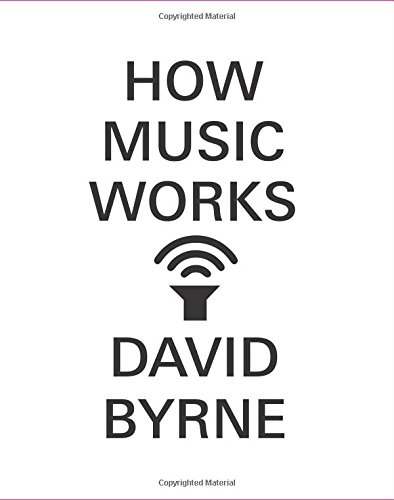
How Music Works
David Byrne
A wide-ranging, deeply personal exploration of music — from the physics of sound to the economics of the music industry — by the Talking Heads frontman and one of music's most curious minds.
View on AmazonExplore other subjects
Foundations
Humanities & Arts