
Literature
How Stories Work
Literature for Curious Minds
An introduction to reading, writing, and why stories matter
Introduction
Literature is what happens when language is asked to do more than get a message across. A shopping list tells you what to buy. A poem, a play, or a novel tries to make you feel the weight of a life, the weather of a mind, the shape of a choice. It uses words the way a carpenter uses wood: not only to hold something up, but to make something worth looking at.
You already know more about this than school may have let you believe. If you have ever stayed up to finish a story, quoted a line because it said what you could not, or recognised yourself in a stranger on a page, you have been practising literary attention. This book is not a tour of famous names designed to make you feel behind. It is a companion for that attention.
We will not pretend that literature is only comfort. Good books can unsettle you. They can make the familiar look strange and the strange look intimate. They can also bore you, bully you, or hide thin thinking behind fine sentences. A grown-up love of reading includes the right to close a book and the right to be changed by one.
The aim here is simple. I want you to see how stories work, why people keep making them, and how poetry, drama, and prose each do a different job. Along the way we will talk about character and plot, style and voice, reading across cultures and centuries, and the ordinary ways books sneak into a life that is already full.
You do not need a theory before you start. You need curiosity and a willingness to linger. Literature rewards lingering. That is almost the whole secret.
So let's begin with the question that sounds obvious until you try to answer it: what is literature, actually?
Chapter 1
What Literature Actually Is
People use the word literature in two tones. One is everyday: anything written down. The other is honoring: writing that seems to last, writing that has been tended by readers across years. This book leans toward the second meaning without becoming snobbish about it. A letter can be literature. A speech can be. A song lyric can brush against it. What matters is not the binding. What matters is what the language is doing.
Literature is patterned language made to be reread. That is a dry sentence for a living thing, but it helps. News gets you to the fact and then expires. A story you love does not expire in the same way. You go back because the words still have work to do in you. The second reading is not a repeat. It is a different conversation with the same partner.
It is also an art of attention. A writer notices what most of us rush past: the pause before a lie, the way light hits a kitchen table, the exact heat of humiliation. Then they find a form that lets a stranger notice it too. When that works, you feel less alone. Someone else has been this precise about being human.
Fiction, Poetry, and Beyond
Is literature the same as fiction? No. Poetry can be fiction or not. Drama can restage history. Essays, memoirs, and speeches can be literary when the sentences carry more than information. Fiction is one of literature's great houses, not the whole town.
Nor is literature simply "important writing." Importance can be political, historical, or moral and still sit in flat prose. Literary quality has to do with how meaning and music hold together. You can disagree about particular cases — people always have — but the disagreement itself assumes there is such a thing as writing that is doing extra work.
Canon and Craft
Canon is the name we give to the pile of books a culture keeps asking new readers to meet. Canons change. They forget people and remember them again. They have been too narrow, too male, too local, too sure of themselves. They have also preserved work that would have vanished without someone insisting it mattered. You do not have to kneel to a list. You also do not have to pretend that nothing written before last Tuesday is worth your time.
If you feel intimidated, that feeling usually came from somewhere: a classroom that treated books as codes to crack, or a culture that uses taste as a class badge. Forget that for a while. A book is a made thing offered to you. You may take it, argue with it, or walk away. The author is not grading you.
By the end of this chapter, literature should look less like a museum rope and more like a craft. It is language shaped so that it can be returned to, and so that a human life — invented or remembered — can be felt from the inside.
Chapter 2
Why We Tell Stories
We tell stories because we are the kind of animal that cannot leave experience raw. Something happens, and then we need it to have a shape. We need a beginning, or at least a place to enter. We need to know what it was for, even if the honest answer is that we do not know yet. Narrative is how the mind stores life so it can be carried.
Children know this before they can explain it. Tell me what happened. Tell me again. Tell me the one about the dark woods. The hunger is older than print. Around fires, on ships, in kitchens, people have been arranging events into tellable form for as long as we have had words. Literature is that hunger grown patient and artful.
What Stories Do
Stories do several jobs at once. They entertain, which is not a shallow thing. Pleasure is one of the ways attention stays long enough to learn. They also let us try on lives we will never live. You can be a soldier, a ghost, a queen, a child in a war, a person who makes a terrible bargain, all without leaving your chair. That rehearsal is not trivial. It stretches the moral imagination.
Stories bind groups. A people is often a set of shared tales about who we were and what we survived. That can be beautiful and it can be dangerous. The same gift that makes belonging possible can make outsiders invisible. Literature at its best complicates the group story. It lets more than one voice into the room.
We also tell stories to keep the dead nearby. A character on a page can outlast the body that first imagined them. Readers meet the dead and find them still warm. That is one reason old books can feel eerily present. Someone who never met you is still talking, and the talk still works.
What Stories Train Us to Want
Not every story is good for us. Some flatten people into types. Some sell revenge as destiny. Some are candy with no fruit. Part of growing as a reader is noticing what a story is training you to want. Do you come away more awake to other people, or more satisfied with your own side? Books do not have to improve you. But they are never quite neutral. They practise a way of seeing.
There is a quieter reason we keep reading. Life is confusing while we are inside it. A story, even a sad one, offers the mercy of form. For a few hours the mess has a rhythm. That does not solve your life. It can make the next morning more habitable.
By the end of this chapter, storytelling should look like a human necessity rather than a hobby. We tell stories to remember, to belong, to rehearse other lives, and to give shape to days that would otherwise blur.
Chapter 3
Poetry and the Music of Language
Poetry is language under pressure. It has less room than a novel and therefore has to mean more per word. That pressure is why some people bounce off it. They expect a story to arrive in the usual way, and instead they get a concentrated weather system. If you slow down, the weather starts to make sense.
Sound is not decoration in a poem. It is part of the thinking. Rhythm, repetition, the click of a consonant, the open vowel that lets a line breathe — these are how feeling gets into the ear before the argument arrives. You can hear this even in translation, though something is always left behind. Read a poem out loud once. Many of them were made for the mouth.
Image and Form
Image is poetry's other engine. Not pictures for their own sake, but comparisons and details that make an inner state visible. Heartbreak becomes a cracked cup. Joy becomes light on water. The point is not cleverness. The point is accuracy of feeling. A good image is a shortcut to a place explanation cannot reach as quickly.
Form can be strict or loose. Sonnets, couplets, blank verse, free verse — each is a different kind of room for the voice to move in. Constraint sometimes frees a writer. Having to find a rhyme can force a better thought than the first one that arrived. Free verse is not the absence of form. It is form invented line by line, and it fails when it is only chopped-up prose.
How to Read a Poem
You do not have to enjoy every kind of poem. Some lyric work is intimate and clear. Some modern work is jagged and resists being summarised. Both can be serious. If a poem feels locked, try asking a small question: who is speaking? what do they want? where does the heat sit in the lines? You are not decoding a safe. You are listening.
Memorising a few poems is an old practice worth keeping. A poem you know by heart can arrive when you need it — on a bus, in a hospital corridor, in a joy you cannot otherwise hold. That is not school nostalgia. That is literature doing one of its oldest jobs: giving you words for moments that outrun ordinary speech.
Poetry also travels well in small doses. A novel asks for an afternoon. A poem can ask for two minutes and still change the colour of the day. For busy lives, that is not a lesser art. It is a different kindness.
By the end of this chapter, poetry should feel less like a locked cabinet and more like speech that has been tuned. It works by sound, image, and pressure, and it rewards a reader willing to go slowly.
Chapter 4
Drama and Voices in a Room
A play is literature that is not finished until bodies are in a space together. The page is a set of instructions for voices, pauses, and movement. You can read Shakespeare in an armchair and get a great deal. You get something else when those lines are spoken across a room to people who might laugh in the wrong place or go silent in the right one.
Drama is built from conflict that cannot stay private. Someone wants something. Someone else is in the way. The audience leans forward because the outcome must happen in time, in front of them. Even a quiet play has this lean. If nothing is at stake, the air goes out of the theatre.
Character on Stage
Character on stage is revealed by what a person says and does under pressure, not by a narrator tapping us on the shoulder. That is why dramatic writing has to be so efficient. There is no paragraph explaining the hero's childhood unless someone on stage is willing to say it, and even then we judge them for saying it. We watch people give themselves away.
Comedy and tragedy are old names for different promises. Comedy promises that the social world can be repaired, usually through recognition, marriage, or the exposure of a fool. Tragedy promises that some errors cost everything, and that we will be asked to look until the end. Plenty of modern plays refuse the neatness of either promise. They still live in the same house: human beings talking their way into and out of trouble.
Reading and Watching Drama
Reading drama takes a small adjustment. You have to hear more than one voice. You have to imagine the gap between what a character says and what they want. Aside, silence, and interruption are part of the text. If you read a script as if it were a novel, you will wonder why it feels thin. It is waiting for breath.
Theatre is also a civic art. People sit together and watch a version of themselves. That can be festive or uncomfortable. Censorship has always noticed this. A story told in public, in bodies, is harder to treat as only private opinion. Literature here is not just personal enrichment. It is a city thinking out loud.
You do not need to live near a famous stage. School halls, radio drama, filmed performances, and kitchen-table readings all count. The essential thing is more than one voice, in time, with something at risk.
By the end of this chapter, drama should look like literature with the door open. It turns writing into an event between people, and it tests character in the only way a crowd will believe: out loud.
Chapter 5
Novels, Stories, and the Long Gaze
The novel is the form most readers now meet first. It has room. It can follow a person across years, sit in a mind for pages, wander through a city, and still come home to a kitchen. That roominess is its gift and its temptation. A novel can feel like life. It can also feel like someone who will not stop talking.
A short story works by compression. It often begins late and leaves early. The art is in what is left unsaid. A good story can haunt you more than a baggy novel because it trusts you to finish the thought. If poetry is language under pressure, the short story is time under pressure.
The Moral Effect of the Novel
The long gaze of the novel changed how people imagined themselves. Once you have lived hundreds of pages inside another consciousness, it becomes harder to treat other people as scenery. That is a moral effect, and it is not guaranteed. Plenty of novels flatter the reader's prejudices. The form makes sympathy possible. It does not enforce it.
Realism, romance, satire, mystery, science fiction, the gothic — these are not cages so much as climates. Each climate permits certain kinds of weather. A detective story promises that clues matter. A romance promises that recognition might still arrive. Speculative fiction asks what would happen if the rules of the world shifted. You can love more than one climate. Snobbery about genre is often just unreadiness to admit that different pleasures are still pleasures.
Serial Reading and the Essay
Serial reading, from nineteenth-century magazines to today's long series, reminds us that stories have always been social. People waited for the next instalment together. They argued about characters as if they were neighbours. That habit has not died. It has only changed platform.
Not every long book earns its length. Some novels are long because the writer could not choose. Others are long because the world they are building needs time for the reader to believe it. Your impatience is information. Sometimes the book is slow because you are meeting a mind that will not be hurried. Sometimes it is slow because it is undercooked. Learning the difference is part of becoming a reader.
The essay sits near this family too. It is a mind walking. Montaigne, to name one ancestor, made a form out of trying thoughts in public. A good essay has the intimacy of a story and the spine of an argument. It belongs in any account of literature that is not hypnotised by plot.
By the end of this chapter, prose narrative should look like a way of spending time with a life. Novels give us duration. Stories give us intensity. Both ask for a gaze that does not glance away at the first difficulty.
Chapter 6
Character, Plot, and What Happens to Us
People come to stories for other people. Plot is what those people do, and what is done to them. If you separate the two too cleanly, you get a puppet show or a diary. The best work binds them. Character is destiny in motion, and plot is character meeting the world.
A character becomes real when they want something and when they can surprise us without becoming random. Consistency plus the capacity to change: that is the tightrope. We believe in a person on the page when their contradictions feel like ours — not because they are sloppy, but because a life contains more than one motive.
Plot and Conflict
Plot, in the old craft sense, is a chain of consequences. One choice makes the next choice harder. Mystery, reversal, recognition: these are not cheap tricks if they grow out of who the people are. They feel cheap when they are lowered onto the story from above, like weather that does not match the ground.
Conflict is not only sword fights. It can be a family supper. It can be a person trying to stay honest in a job that rewards the opposite. Dramatic tension is the feeling that something cannot remain as it is. If a story has no tension, it may still offer beauty, but it will not pull. Many readers, quite reasonably, want to be pulled.
Point of View and Endings
Point of view is the secret architecture. Who is looking? How much do they know? Can we trust them? A first-person voice can be intimate and unreliable at once. A third-person gaze can sit close to one mind or float above a whole town. Changing the lookout changes the meaning. The same events told by a child, a servant, or a king are not the same story.
Endings are a moral problem as well as a technical one. Does the ending feel earned? Does it punish the wrong person because the author lost nerve? Does it open a window or slam a door for effect? Readers argue about endings because they are arguing about what the story has taught them to hope for.
You can enjoy a plot and still ask what it is doing to you. Some plots train us to wait for justice. Some train us to enjoy humiliation. Some suggest that love conquers. Some suggest that luck does. Becoming a better reader is partly becoming a better noticer of those lessons.
By the end of this chapter, character and plot should look like two names for one process: a person under pressure, moving through time, forcing us to care what happens next.
Chapter 7
Style, Voice, and the Feel of a Page
Style is the fingerprint of a piece of writing. It is word choice, sentence length, humour, restraint, the way images arrive. People sometimes treat style as icing. In literature it is closer to the cake. How a thing is said is part of what is said.
Voice is style with a human throat in it. You hear a particular mind leaning toward you. Some voices are confiding. Some are grand. Some are bone-dry. When readers say they fell in love with a book, they often mean they fell in love with a voice. They wanted more time in that company.
Clarity, Difficulty, and Tools
Clarity is a virtue, but it is not the only one. A sentence can be clear and dead. Another can be difficult because the thought is difficult, and the difficulty is honest. The test is whether the resistance is in the world being described or only in the writer showing off. One kind of difficulty invites you in. The other stands in the doorway collecting tickets.
Metaphor, irony, understatement, repetition — these are tools, not medals. Used well, they make experience sharper. Used badly, they become a nervous tic. You do not need the names to feel the effects. The names simply help you point to what you felt.
Translation and Your Own Voice
Translation is where style becomes a visible problem. A translator has to carry not only meaning but tempo and tone. Two translations of the same poem can feel like two different nights. If you only read in one language, translators are your secret benefactors. It is worth noticing their names.
You have a style too, even if you never publish. The way you tell a story at dinner, the words you reach for in a letter, the jokes you repeat — that is voice in the wild. Reading widely is one of the ways a person gets a larger instrument. You borrow music until some of it becomes your own.
Do not be bullied by ornate writing, and do not be snobbish about plain writing. Plainness can be a high art. Ornate work can be a joy when it is alive. Taste here is less about rules than about vitality. Does the page feel inhabited?
By the end of this chapter, style should feel like the presence of a mind on paper. Voice is how that mind keeps you company, and learning to hear it is one of the real pleasures of reading.
Chapter 8
Reading Across Time and Place
Old books do not owe you ease. They come from worlds where marriage, faith, empire, gender, and work meant different things. If you read them only to confirm what you already think, you will find them either quaint or offensive and stop there. If you read them as reports from another country of the human, they become interesting again.
Historical imagination is a kindness and a discipline. It does not mean forgiving everything. It means not being shocked that the past failed to share your exact opinions. People then were as intelligent and as blind as people now, just in different spots. Literature lets you sit with that fact until it becomes humbling rather than merely annoying.
Reading Across Place
Reading across place asks for a similar humility. A novel from another language may use family, honour, or humour in ways your own culture does not. The strangeness is part of the gift. If every book feels immediately comfortable, you may be reading inside a small room and calling it the world.
There is a practical problem: time is short and the shelves are long. No one reads everything. The honest approach is to read some old things, some new things, some close to home, and some far away, and to let them argue with each other in your head. A diet of only the contemporary is as odd as a diet of only the ancient.
Power, Values, and Rereading
Power has always shaped which stories travel. Books from rich cities and imperial languages have had a head start. That is changing, slowly. Seeking out work that had to travel farther is not a fashion. It is a way of not mistaking a loud neighbourhood for the whole city.
You will meet values you reject. Sometimes the right response is to close the book. Sometimes the right response is to keep reading and stay awake. There is no moral medal for finishing a cruel book, and no virtue in refusing every difficulty. Judgement is the point. Literature trains judgement by giving it material.
Rereading an old favourite at a new age is one of the quiet proofs that books are alive. The text did not change. You did. The marks you did not notice at twenty stand up at forty and clear their throat.
By the end of this chapter, reading across time and place should feel like travel with better companions. The aim is not to collect stamps. The aim is to have more than one century and more than one neighbourhood in your inner life.
Chapter 9
Taste, Criticism, and Disagreement
Taste is personal, and it is not only personal. You like what you like because of your history, your ear, your patience, your wounds. You also like what a culture trained you to admire. Criticism is the attempt to make that mixture speakable — to say not just "I loved it" but "here is what it is doing, and here is why that might matter."
A good critic is a good host. They bring you to the door of a work and point out the rooms you might have walked past. A bad critic is a bouncer. They make you feel that the party was never for you. If your early encounters with "serious reading" felt like the second kind, it is understandable that you walked off. Come back on your own terms.
Disagreement and Dislike
Disagreement is not a failure of literature. It is one of its signs of life. People have been arguing about the same plays for centuries. That does not mean anything goes. It means a rich work supports more than one intelligent reading. The test of a reading is whether it can point to the text and say, see, this is why.
You are allowed to dislike a famous book. You are on thinner ice if you dislike it without having met it. Second-hand scorn is a dull habit. First-hand dislike, honestly explained, can be interesting. "It left me cold because the women are furniture" is a better sentence than "classics are boring."
Criticism in the Wild
Schools sometimes teach literature as if the goal were to extract a theme and put it on a tray. Themes exist. Reducing a living work to one of them is like reducing a person to their job title. Better questions are: what does this book love? what does it fear? who gets to speak? where is it dishonest? Those questions keep the work intact.
Reviews, essays, conversations with friends, even arguments on a walk home from the theatre — these are all criticism in the wild. You do not need permission to think in public about what you read. You only need to be fair to the object in front of you and honest about the self doing the looking.
Taste can grow. That is the hopeful part. The book that defeated you five years ago may open now. The opposite also happens: a once-beloved style can start to look like a trick. Growth is not always toward difficulty. Sometimes it is toward a clearer hunger for truth and life on the page.
By the end of this chapter, criticism should look like a form of friendship with books: sometimes affectionate, sometimes sharp, always trying to see what is actually there rather than what a reputation promised.
Chapter 10
Literature in Ordinary Life
Literature earns its keep in ordinary hours, not only in classrooms. A poem on a difficult morning. A novel on a train that makes the commute less like a tunnel. A line remembered when you are trying to be brave. This is not a lesser use of art. This is art doing what it has always done: keeping people company.
Reading is one of the last private freedoms that requires almost no equipment. A library card, a used copy, a screen if that is what you have. In a life crowded with feeds that want your reaction now, a book wants something rarer: your time, given freely, in a sequence the author chose. That slowness can feel inconvenient. It is also a form of rest.
Books and the Feelings
Books educate the feelings without announcing a lesson. You practise patience, surprise, and sympathy. You also practise spotting a lie, including the pretty ones. That education leaks into how you listen to friends and how you tell your own life to yourself. Be careful which stories you swallow. You will start to live inside them.
Sharing books is a way of saying, this is what I have been, lately. A recommendation is a small intimacy. Book clubs, when they are kind, turn reading back into what it was for long stretches of history: a social act. Talking about a character can be safer than talking about yourself, and then suddenly you are talking about yourself anyway.
Writing and Fallow Years
Writing, even privately, completes the circuit. You do not have to become a novelist to benefit from putting a day into sentences. The attempt teaches you what you actually noticed. Literature is not only other people's finished work. It is a way of handling experience that you can borrow for your own notebooks.
There will be seasons when you cannot read. Grief, exhaustion, and new babies are famous thieves of attention. The books will wait. A reading life is allowed to have fallow years. The relationship is not cancelled because you missed a winter.
If you want a practical start, choose one living book and one old one. Read a poem each week out loud. Keep a list not of trophies but of sentences that stayed. That is enough. Literature does not need you to be impressive. It needs you to be present.
By the end of this chapter, literature should feel like a companion for the life you are already living. It is not an extra subject. It is one of the ways human beings have found to stay awake and stay kind inside their allotted time.
Conclusion: Keeping Company with Books
Literature is patterned language that can be returned to. It is stories, poems, and plays made so that a life can be felt from the inside. We tell these things because we cannot bear to leave experience without a shape, and because we want company in the shaping.
We have walked through poetry's pressure, drama's public voices, the long gaze of the novel, the mechanics of character and plot, the fingerprint of style, the work of reading across time and place, the uses of disagreement, and the quiet place books occupy on ordinary Tuesdays.
You do not owe any list of masterpieces your allegiance. You do owe yourself better than a diet of only what is easiest to swallow. Read widely enough that your inner ear has more than one tune. Read slowly enough that a sentence can land. Read honestly enough that you can say when a famous name left you cold.
A book is a conversation that waits. The dead can still speak, and the living can still be heard across oceans. In a world that hurries every other signal, that patience is a kind of hospitality. Return it when you can.
If this primer has done its job, the next book you open will feel less like a test and more like a visit. Go in. Stay as long as the company is good. Come back changed, or come back merely rested. Both are legitimate gifts of literature.
By the end of this book, stories should look like one of the essential human technologies: a way of keeping meaning warm enough to pass from hand to hand. That is work worth learning to see.
Further Reading
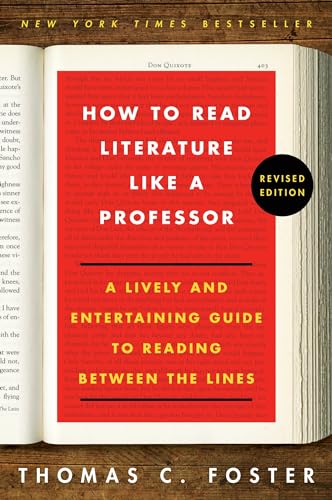
How to Read Literature Like a Professor
Thomas C. Foster
A witty, accessible guide to the hidden patterns, symbols, and archetypes that run through great literature — helping readers see what experienced critics see, and enjoy books on a deeper level.
View on AmazonExplore other subjects
Foundations
Humanities & Arts