
History
How the World Unfolded
World History for Curious Minds
A clear, accessible guide to the human story across time and place
Introduction
World history is the attempt to understand the human past as a single, interconnected story. Instead of focusing on one nation or region in isolation, it looks across continents and centuries to see how people, ideas, goods, diseases, and power have moved and interacted.
Most of us learn history in fragments — the story of our own country, a particular period, or a set of famous events. World history steps back. It asks how those fragments fit into larger patterns: the spread of farming, the rise and fall of empires, the growth of trade networks, the impact of technologies, and the making of the modern global system.
This book offers a clear, accessible overview of that larger story. You do not need prior historical knowledge. The aim is to trace the major developments that have shaped human societies from the earliest times to the present, while remaining honest about the limits of what we know and the variety of human experience.
We begin by asking what world history is and how it differs from national histories. From there we move through early human societies, the first civilisations, classical ages, the expanding worlds of faith and empire, the transformations of the early modern period, the age of industry and empire, the upheavals of the twentieth century, and the global age we inhabit now. A final chapter reflects on recurring patterns and different ways of seeing the past.
Each chapter stands on its own, but together they form a continuous narrative. By the end of this book you will have a coherent framework for understanding how the world of today came to be. The past does not dictate the future, but it shapes the conditions under which we act. Understanding those conditions is one of the best ways to make sense of the present. History does not repeat itself exactly, yet the patterns and forces that shaped earlier centuries continue to influence the choices available to us now.
Chapter 1
What World History Actually Is
World history studies the past on a global scale. It seeks connections, comparisons, and large-scale patterns that are invisible when history is told only within the borders of a single country or civilisation.
Connections and Comparisons
Traditional national histories often treat one society as the main character and others as background. World history reverses that emphasis. It pays attention to movements of people, goods, ideas, and diseases across regions, and to the ways different societies have influenced one another. A local event often has causes and consequences that stretch far beyond any single place.
This approach does not ignore local detail. It tries to place local events in wider contexts. A war, a trade route, a technological innovation, or a religious movement usually has causes and consequences that stretch beyond any single place. Seeing those links changes how we understand both the local and the global. The same event can look very different when viewed from inside one society and when viewed as part of a larger web of connections. World history asks us to hold both perspectives at once.
Limits and Frameworks
World history is also comparative. It asks why similar developments — agriculture, cities, empires, industrialisation — occurred in some places and not others, or occurred at different times and in different forms. Comparison helps distinguish what is common in human experience from what is particular. It prevents us from treating the history of one region as if it were the history of everyone.
No single narrative can capture everything. The human past is too vast and too varied. World history offers frameworks and major storylines while remaining aware that many voices and experiences remain only partly visible in the records we have. The written sources that survive often privilege the powerful, the literate, and the urban. Recovering the experiences of ordinary people, of women, of enslaved or marginalised groups, remains an ongoing and incomplete task.
Key Takeaways
- World history studies the past on a global scale.
- It emphasises connections, comparisons and large-scale patterns.
- Local events often have wider causes and consequences.
- No single narrative can capture the full variety of the human past.
Chapter 2
Early Humans and the First Societies
Human beings evolved in Africa and gradually spread across the globe. For most of our species' existence, people lived in small, mobile groups that hunted, gathered, and fished. These societies developed language, tools, art, and complex social relationships long before the appearance of cities or writing.
From Foraging to Farming
The shift to agriculture, beginning in several regions around 12,000 to 10,000 years ago, was one of the most consequential changes in human history. Domestication of plants and animals allowed more reliable food supplies, denser populations, and eventually permanent settlements. Farming emerged independently in different parts of the world, shaped by local plants, animals and climates. There was no single centre from which agriculture spread to everyone else. The process unfolded differently in the Fertile Crescent, in China, in Mesoamerica, in the Andes, and in other regions.
Agriculture brought advantages and costs. It supported larger communities and specialisation of labour, but it also meant harder physical work for many, new diseases from close contact with animals, and greater vulnerability to crop failure. Social inequalities tended to increase as some families gained control over land and surplus. The move to farming was not a simple improvement; it was a trade-off with long consequences. Skeletal evidence from early farming communities often shows more signs of hard labour and nutritional stress than the bones of earlier foragers.
Foundations for Later History
Early farming villages eventually gave rise, in some regions, to more complex societies. Not every agricultural community developed cities or states. Geography, climate, available plants and animals, and historical contingency all played roles in where and when more elaborate social organisations appeared. The path from village to city was neither automatic nor universal. Many societies remained relatively egalitarian and small-scale for thousands of years after adopting farming.
The long early phase of human history laid the foundations for everything that followed. The move from foraging to farming transformed how people lived and set the stage for the first civilisations. The decisions and adaptations of those early communities still echo in the distribution of crops, languages, and genetic patterns we see today.
Key Takeaways
- Humans lived as foragers for most of their existence.
- Agriculture emerged independently in several regions.
- Farming brought both larger populations and new social inequalities.
- Not all farming societies developed cities or states.
Chapter 3
The Rise of Civilisations
From several thousand years BCE, complex societies with cities, states, writing, and monumental architecture appeared in different parts of the world. Historians often call these early civilisations. They developed in Mesopotamia, Egypt, the Indus Valley, China, Mesoamerica, and the Andes, among other places.
Shared Features and Differences
These societies shared certain features: concentrated populations, specialised occupations, organised government, systems of record-keeping, and significant inequalities of wealth and power. They also differed in environment, political form, religious practice, and cultural style. There was no single model of civilisation. Each developed in response to its own setting and history. River valleys offered different possibilities from highland plateaus or coastal regions.
Writing was a crucial innovation. It allowed governments to keep accounts, record laws, and preserve literature and religious texts. Different civilisations invented different writing systems, each adapted to their languages and needs. Writing made possible new forms of administration and cultural memory that oral societies could not match in scale or permanence. Once writing existed, the possibility of cumulative knowledge across generations expanded dramatically.
Interaction and Continuity
Trade and interaction linked many of these early centres. Goods, technologies, and ideas moved along rivers, seas, and overland routes. No civilisation developed in complete isolation, even if contacts were sometimes intermittent. Influence flowed in multiple directions rather than from a single source. Technologies such as bronze working, wheeled vehicles, and certain crops spread widely through these networks.
The rise of civilisation was not a simple story of progress. It involved new forms of power and exploitation as well as new achievements in art, knowledge, and organisation. Many people continued to live outside urban centres in farming or pastoral communities. The majority of the human population for most of this period still lived in villages rather than cities.
Key Takeaways
- Early civilisations developed in several regions with cities, states and writing.
- They shared some features but differed widely in form and culture.
- Writing enabled new forms of administration and cultural memory.
- Trade and interaction linked many early centres.
Chapter 4
Classical Ages and Expanding Worlds
In the centuries around the middle of the first millennium BCE and into the early centuries CE, several large and influential societies flourished. These included classical Greece and Rome in the Mediterranean, the Mauryan and later Gupta periods in India, and the Han dynasty in China. Other complex societies continued to develop in Africa, the Americas, and elsewhere.
Cultural and Commercial Expansion
These eras saw major developments in philosophy, science, political thought, law, and literature. They also saw the expansion of trade networks that linked distant regions. The Silk Roads and Indian Ocean routes, for example, carried goods and ideas between East Asia, Central Asia, India, the Middle East, and the Mediterranean. Long-distance exchange became a regular feature of life for many societies, even if most people still lived and died within a relatively small radius.
Empires rose and fell. Military power, administrative capacity, and the ability to extract resources determined how long large political structures lasted. Cultural and religious traditions often outlived the states that first promoted them. Ideas and practices could travel farther and last longer than the empires that carried them. The legacy of classical thought, law, and religion continued to shape later centuries long after the original empires had disappeared.
Interaction and Exchange
Interaction was not only peaceful. Conquest, migration, and competition for resources were common. Yet the exchange of crops, technologies, and knowledge across regions gradually increased the resources available to human societies. The classical ages left both political legacies and wider webs of connection that later periods would inherit and transform.
Key Takeaways
- Classical ages produced major cultural and political traditions.
- Trade networks linked distant regions across Afro-Eurasia.
- Empires rose and fell while cultural traditions often endured.
- Exchange of crops, technologies and knowledge increased over time.
Chapter 5
Faith, Empire, and Exchange
Between roughly 500 and 1500 CE, major religious traditions spread widely and large empires organised much of political life. Christianity, Islam, and the continuing development of Buddhism and Hinduism shaped belief, law, and identity across vast areas. Other religious and philosophical traditions remained important in their regions.
Empires and Networks
Empires such as those of the Islamic caliphates, the Byzantine state, Tang and Song China, the Mongols, and various African and American polities created frameworks for trade, taxation, and cultural exchange. The Mongol expansion of the thirteenth century temporarily linked much of Eurasia under related regimes and intensified contact along the Silk Roads. For a time, travel and exchange across much of the continent became safer and more regular than they had been for centuries.
Trade networks expanded. The Indian Ocean became a major arena of exchange linking East Africa, the Middle East, India, and Southeast Asia. Overland routes continued to move goods and ideas. New crops, technologies, and knowledge spread through these connections. The period saw both political consolidation in some regions and the thickening of commercial and cultural ties across long distances.
Diversity and Continuity
This period was not one of uniform progress or unity. Political fragmentation, invasions, and local diversity remained the norm in many areas. The Americas developed complex societies, including large states, with little contact with Afro-Eurasia until the end of the period. The human world remained divided into several largely separate zones of interaction, even as connections within each zone grew denser.
Key Takeaways
- Major religions spread widely and shaped law and identity.
- Large empires created frameworks for trade and cultural exchange.
- The Indian Ocean and Silk Roads linked distant regions.
- The Americas developed complex societies largely independently.
Chapter 6
The Early Modern Transformation
From the fifteenth to the eighteenth centuries, the world was transformed by new maritime connections, the rise of European power, and intensified global exchange. The voyages of exploration and conquest linked the Americas permanently with Afro-Eurasia for the first time.
The Columbian Exchange and Empires
The Columbian Exchange moved plants, animals, people, and diseases across the Atlantic. Crops from the Americas, such as maize and potatoes, eventually supported population growth in Europe, Asia, and Africa. Old World diseases devastated many indigenous American populations. The Atlantic slave trade forcibly moved millions of Africans to the Americas. The demographic and ecological consequences were enormous on every side of the exchange. Entire landscapes and diets were reshaped.
European states built overseas empires and trading networks. Silver from the Americas flowed into global commerce, affecting economies from Europe to China. New forms of company organisation and state power supported long-distance trade and colonisation. European influence grew, but it did not yet dominate every region. Large and powerful states continued to flourish in Asia and elsewhere.
Continuing Centres of Power
Elsewhere, large land empires continued to develop: the Ottoman, Safavid, and Mughal empires in the Islamic world, and the expansion of Qing China. These states remained major centres of power and culture even as European maritime influence grew. The early modern world was multipolar, not simply European-dominated. Power and wealth were still widely distributed across several major centres.
Key Takeaways
- Maritime connections permanently linked the Americas with Afro-Eurasia.
- The Columbian Exchange transformed diets, populations and disease patterns.
- European overseas empires expanded alongside continuing land empires.
- A truly global system of exchange and power emerged.
Chapter 7
Industry, Empire, and Revolution
From the late eighteenth century, industrialisation began to transform production, energy use, and social organisation, first in Britain and then in other parts of Europe, North America, and eventually elsewhere. Machines, fossil fuels, and factory organisation massively increased the output of goods.
Industry and Empire
Industrial power supported a new wave of imperial expansion. European states, and later the United States and Japan, extended formal and informal control over large parts of Asia, Africa, and the Pacific. Colonial rule reorganised economies, societies, and politics in the colonised regions. The industrial advantage made possible a new scale of global domination that earlier empires had not achieved.
Political revolutions and reform movements challenged existing orders. The American and French revolutions, independence movements in Latin America, and later nationalist and social movements elsewhere spread new ideas about rights, citizenship, and popular sovereignty. These ideas were applied unevenly and often excluded many people. The language of rights expanded even as inequalities of race, gender and class persisted.
Social and Global Consequences
Industrial society created new social classes, urban growth, and environmental change. It also generated movements for workers' rights, women's rights, and national self-determination. The gap between industrialised and non-industrialised regions widened dramatically. By the end of the nineteenth century the world was more unequal in wealth and power than it had been for centuries. That inequality became one of the defining features of the modern era.
Key Takeaways
- Industrialisation transformed production, energy use and society.
- Industrial power supported a new wave of imperial expansion.
- Revolutions spread new ideas about rights and sovereignty.
- The gap between industrialised and other regions widened.
Chapter 8
The Twentieth Century
The twentieth century was marked by unprecedented violence, rapid technological change, and the reorganisation of global power. Two world wars, the rise and fall of totalitarian regimes, and the Cold War shaped politics and daily life for hundreds of millions.
War, Superpowers and Decolonisation
The world wars destroyed old empires and created new superpowers. The United States and the Soviet Union emerged as dominant rivals after 1945, competing ideologically, militarily, and economically across the globe. Decolonisation brought formal independence to most of Asia and Africa, though economic and political constraints often remained. Formal empire ended; unequal relationships often continued in new forms of economic and political influence.
Technological and scientific advances transformed medicine, communication, transport, and warfare. Nuclear weapons introduced a new scale of potential destruction. At the same time, rising living standards in many regions, longer life expectancy, and mass education changed the conditions of ordinary life. The century combined extraordinary destruction with extraordinary gains in health and knowledge for large parts of the world's population.
Institutions and Pressures
The century also saw the growth of international institutions, human rights language, and global economic integration. These developments coexisted with persistent inequality, regional conflicts, and environmental pressures. The tools for managing a connected world expanded, even as the problems of that world grew more complex and more global in scope.
Key Takeaways
- Two world wars and the Cold War reshaped global power.
- Decolonisation brought formal independence to most of Asia and Africa.
- Technological change transformed daily life and warfare.
- International institutions and human rights language expanded.
Chapter 9
A Global Age
The period since the late twentieth century is often described as a global age. Economic, technological, and cultural connections have intensified. Information, goods, capital, and people move across borders at unprecedented speed and volume.
Connections and Tensions
The end of the Cold War removed one major dividing line, but new tensions emerged around economic inequality, migration, identity, and geopolitical competition. Rising powers, especially in Asia, have shifted the balance of global influence. The world is more multipolar again, even as it is more tightly connected than ever before.
Digital technology has changed how people communicate, work, and organise. It has created new opportunities and new forms of vulnerability. Environmental challenges, particularly climate change, have become central global concerns that no single state can solve alone. The problems of a connected world require connected responses, yet the political capacity for such responses remains uneven.
Culture and Uneven Benefits
Cultural exchange has accelerated, yet local and national identities remain powerful. Globalisation has produced both homogenisation and new assertions of difference. The benefits and costs of global integration are unevenly distributed. Some regions and groups have gained enormously; others have been left behind or actively disadvantaged. The experience of globalisation depends heavily on where one stands within the global system.
Key Takeaways
- Global connections of goods, capital, information and people have intensified.
- New tensions have emerged around inequality, migration and identity.
- Digital technology and climate change are central global issues.
- Benefits and costs of globalisation are unevenly distributed.
Chapter 10
Patterns and Perspectives
Looking across the whole span of world history reveals recurring patterns. Humans have repeatedly developed agriculture, cities, states, and trade networks. Empires have risen and fallen. Religions and ideologies have spread and adapted. Technologies have increased human power over nature and over one another.
Patterns and Contingency
At the same time, history is full of contingency. Small differences in environment, timing, or decision have led societies down different paths. There is no single ladder of development that all societies climb. Variation is as important as commonality. The human past is full of both repeating patterns and unique turns that could easily have gone otherwise.
Different perspectives emphasise different aspects of the past. Some focus on states and power, others on economic systems, environmental constraints, cultural meanings, or the lives of ordinary people. No single perspective captures everything. A richer understanding comes from holding several in view and noticing what each one highlights and what it leaves out. History looks different depending on the questions we ask and the sources we prioritise.
Progress and Its Limits
World history also raises questions about progress. Material conditions and knowledge have expanded dramatically for many people, yet violence, inequality, and environmental damage remain persistent. Gains in one area have often brought costs in others. Progress is real in some dimensions and ambiguous or absent in others. Judging the overall direction of history depends on which measures we choose and whose experiences we count.
Key Takeaways
- Recurring patterns include agriculture, cities, states and empires.
- Contingency and variation are as important as common patterns.
- Different perspectives highlight different aspects of the past.
- Material progress has often brought new costs and inequalities.
The Human Story
World history is the story of how human beings have spread across the planet, organised themselves into societies, interacted with one another, and transformed their environments over tens of thousands of years.
We have traced that story from early foragers and the first farmers, through the rise of civilisations and classical ages, the expanding networks of faith and empire, the global connections of the early modern period, the transformations of industry and empire, the catastrophes and innovations of the twentieth century, and into the interconnected world of today.
The past does not dictate the future, but it shapes the conditions under which we act. Institutions, technologies, inequalities, and ideas all carry historical weight. Understanding how they developed makes the present more intelligible.
World history does not offer simple lessons or moral certainties. It does offer perspective: a sense of the scale of human change, the depth of human diversity, and the long processes that have created the world we inhabit.
The human story is both shared and varied. It is still being written, and understanding its earlier chapters is one of the best ways to orient ourselves within it.
Further Reading
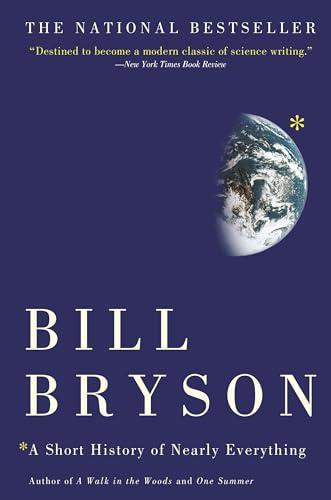
A Short History of Nearly Everything
Bill Bryson
A joyful, wide-ranging journey through the history of science and civilisation — from the Big Bang to the rise of modern humanity — told with warmth, wit, and genuine wonder.
View on AmazonExplore other subjects
Foundations
Humanities & Arts